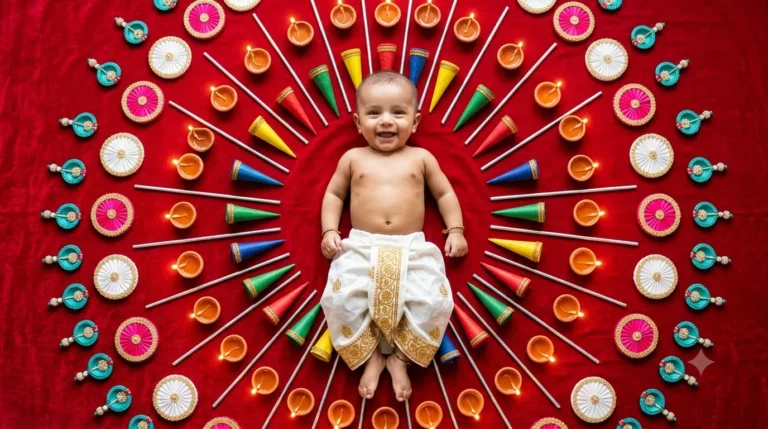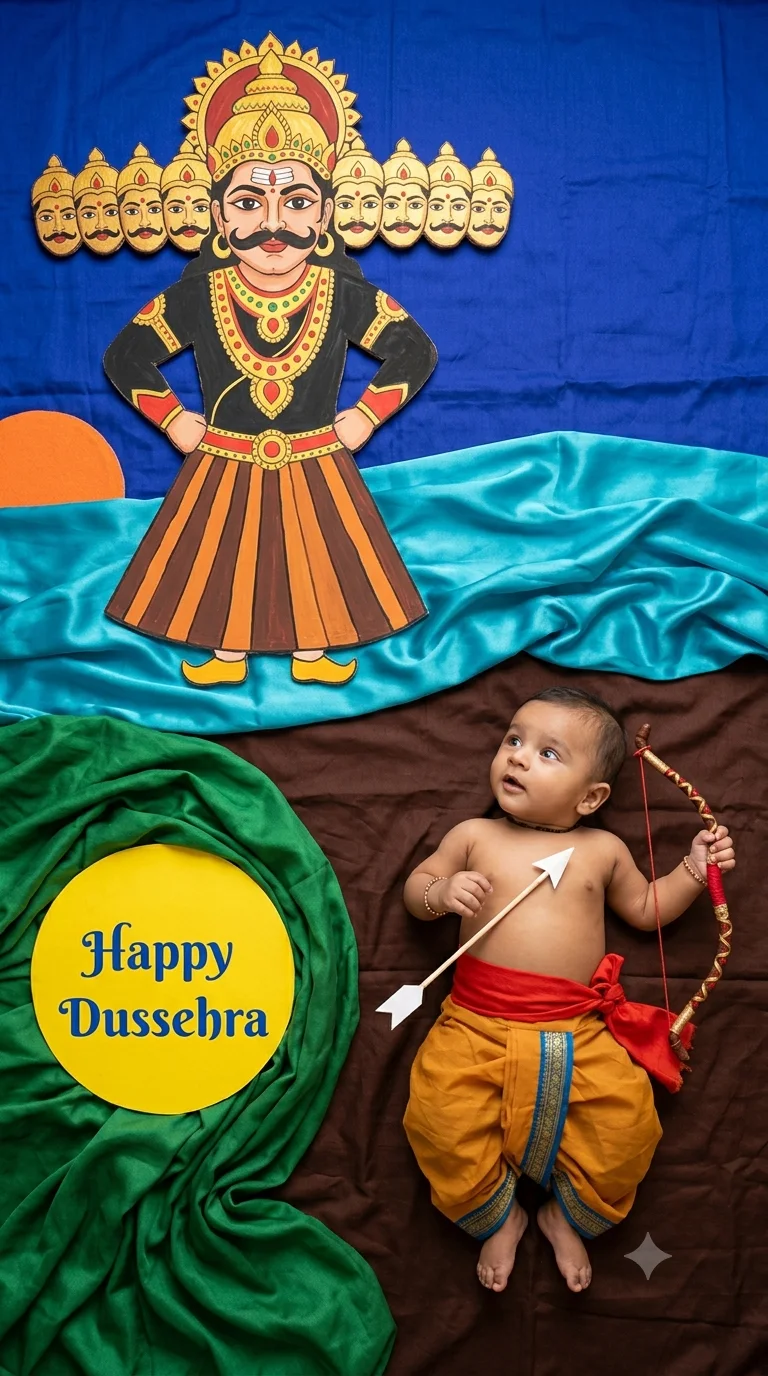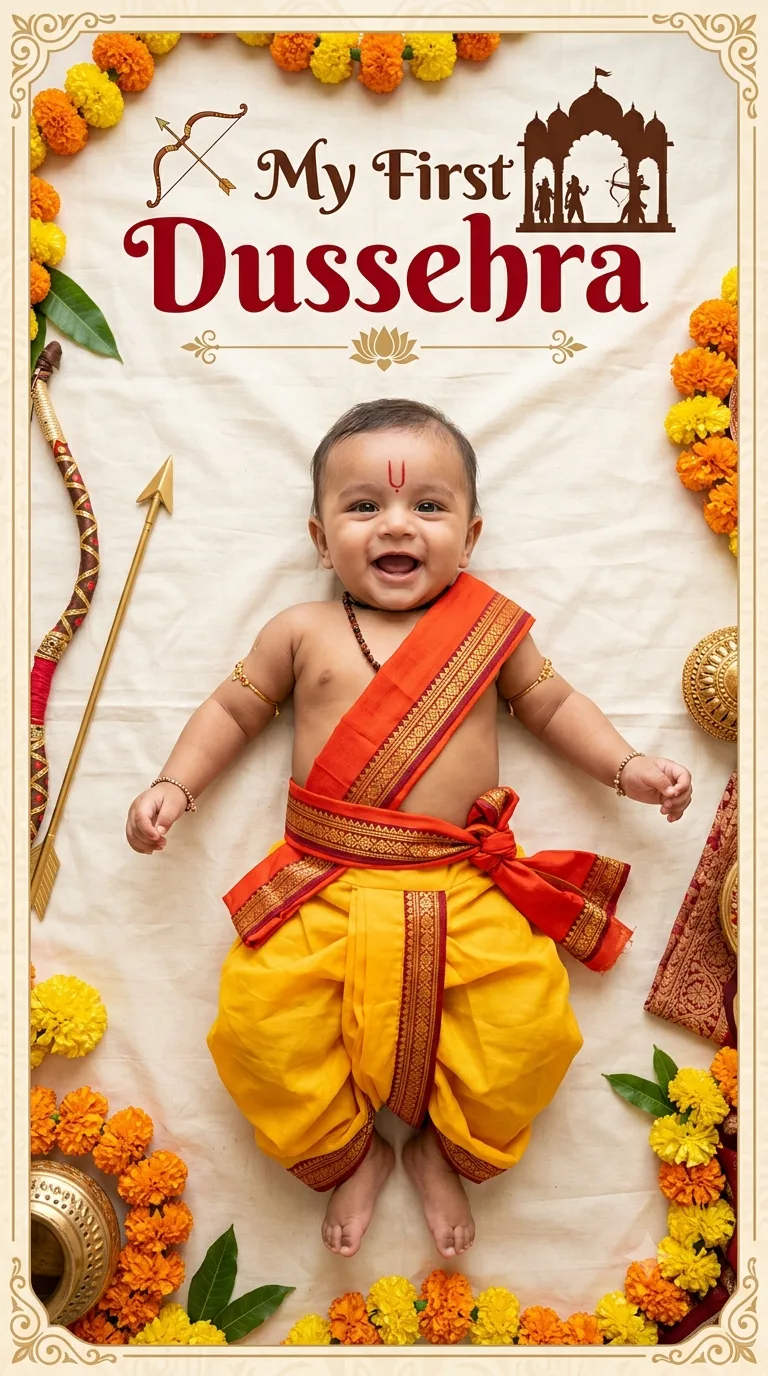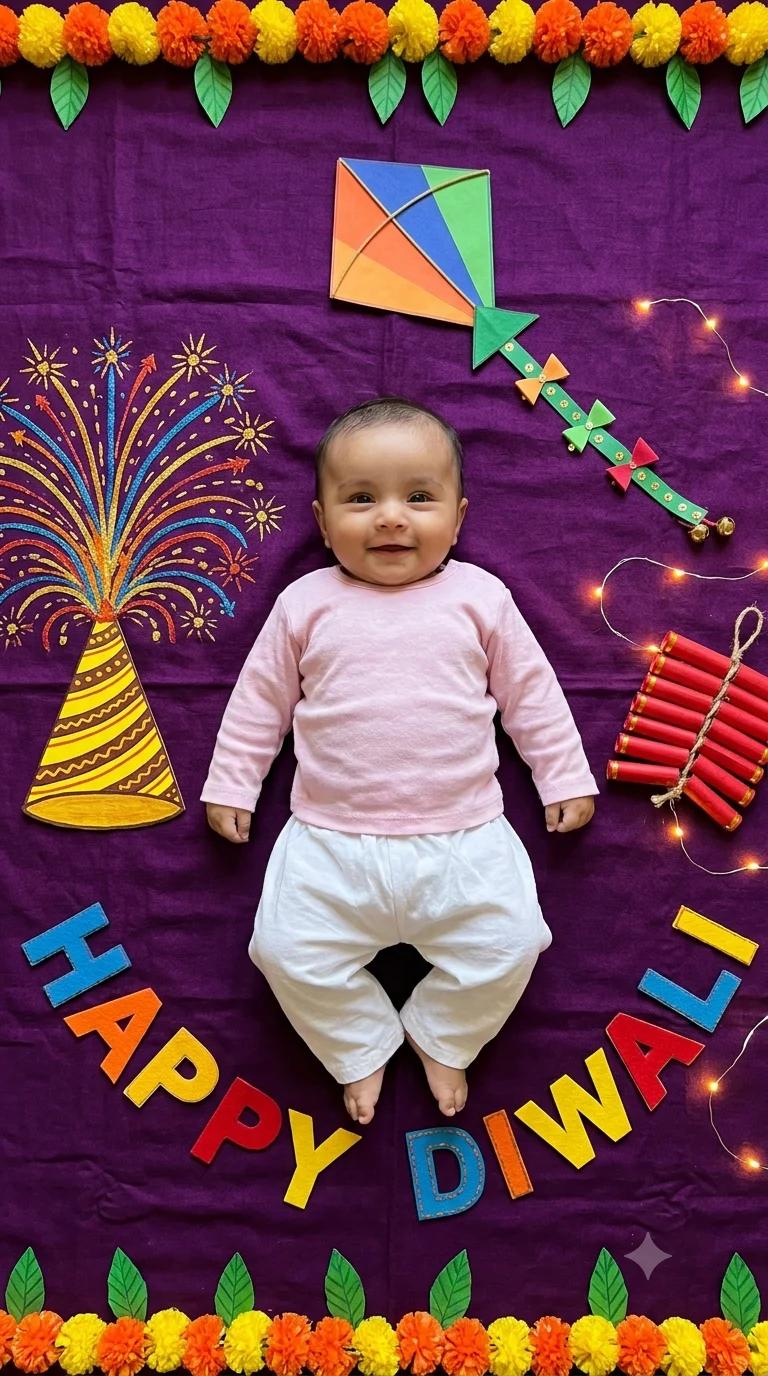
Diwali Photoshoot Baby Boy Gemini Prompt!
Baby
Create Image Colorful Diwali Celebration Baby Photoshoot Prompt STRICT FACE IDENTITY COPY DNA Use the uploaded reference image …
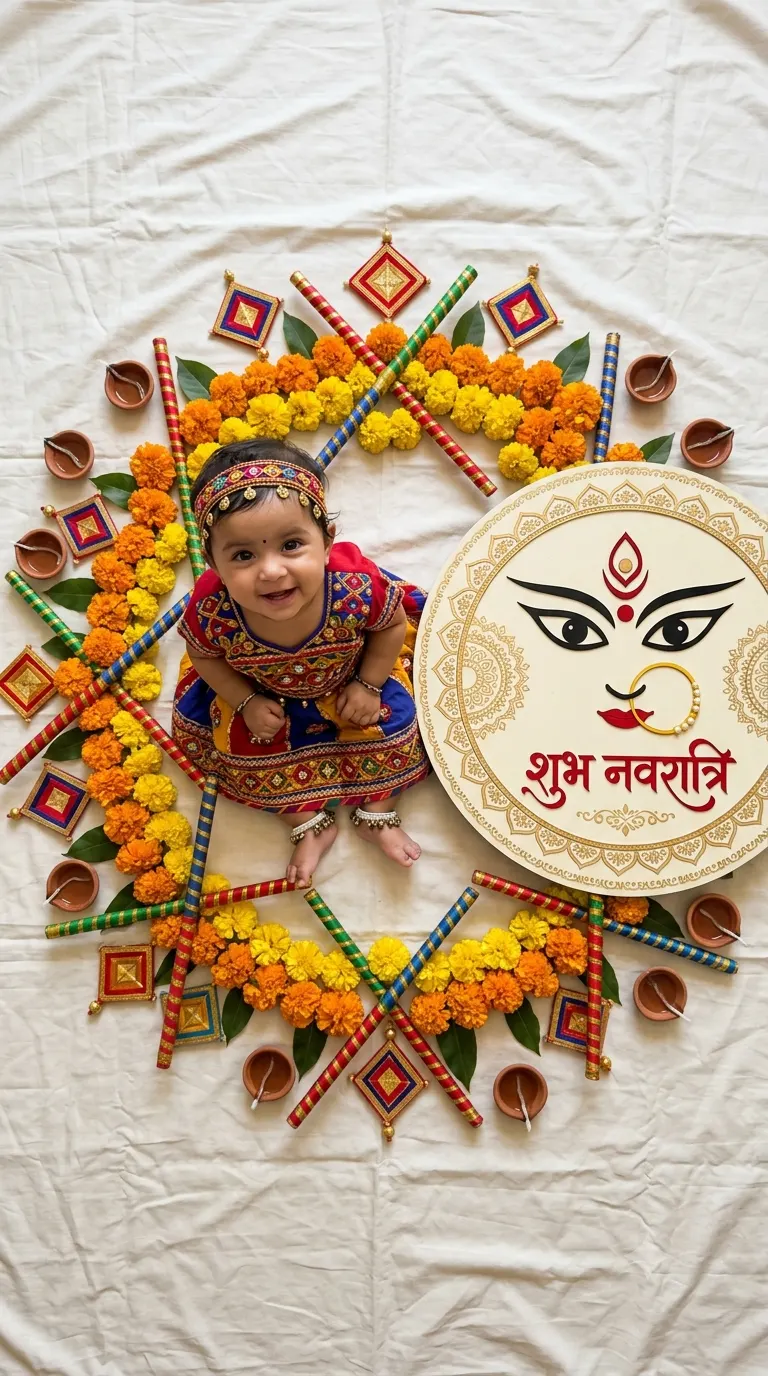
Create Image Baby Navratri Photoshoot With Colorful Dandiya Mandala and Maa Durga Artwork using prompt seen below.
Use the uploaded reference image exclusively as the facial identity source for the baby. Directly copy the exact facial identity, including head shape, forehead, natural hairline, eyebrows, eyelids, eye shape and spacing, nose, lips, cheeks, chin, ears, natural skin tone, skin texture, facial proportions, apparent age, and every recognizable facial characteristic. Do not beautify, reshape, stylize, or modify the facial features. The uploaded image is used only for facial identity; reconstruct all other elements from the written visual blueprint below.
Reconstruct the image as a vertical, directly overhead Navratri baby photoshoot arranged on a softly wrinkled ivory-white fabric sheet. The central visual concept is a baby sitting inside an elaborate circular sunburst or mandala made from colorful dandiya sticks, small marigold flowers, traditional ornaments, and miniature terracotta diyas.
The baby is positioned slightly left of the overall center, while a large circular decorative plaque featuring Maa Durga's facial artwork and Hindi lettering occupies the right side. The dandiya sticks radiate outward in repeated triangular patterns, forming a dense, colorful decorative halo around the baby.
Place the baby in the central-left portion of the image, sitting upright with the head toward the upper-middle and the feet pointing toward the lower-middle. The baby sits within the open inner circle of the decorative arrangement.
The large circular mandala surrounds the baby, extending close to all four edges of the vertical frame. Numerous long, multicolored sticks radiate outward from the inner ring. The Maa Durga plaque overlaps the mandala on the right side.
Preserve the original asymmetrical balance: the baby is the central subject, but the circular plaque occupies a substantial part of the right side. Do not center the plaque above the baby or turn the composition into a symmetrical poster.
Reconstruct the baby sitting upright with the face looking toward the overhead camera. Both arms rest naturally beside the torso, with the elbows slightly bent and the hands positioned near the sides of the skirt. The legs extend downward, with the feet close together.
Maintain the natural infant proportions, upright posture, relaxed hands, and direct upward gaze. Do not change the baby to a lying, crawling, or standing pose.
Recreate the traditional festive baby outfit shown in the reference: a richly embroidered sleeveless blouse and a broad, flared skirt in vivid red, royal blue, mustard yellow, orange, and gold.
The blouse features a dark-blue base with dense multicolored circular and geometric embroidery. The skirt has a prominent royal-blue waistband and multiple colorful horizontal decorative bands, including yellow and red floral motifs, intricate borders, and reflective-looking embellishments.
Preserve the outfit's layered appearance, ornate detailing, and full circular skirt spread around the baby's legs. Add a narrow traditional headband with matching colorful embroidery across the forehead.
Include the delicate ankle ornaments visible around the baby's feet. Do not substitute a different dress, modern outfit, or unrelated costume.
The main background artwork is a large, elaborate radial mandala constructed from colorful dandiya sticks and traditional festive decorations.
Create a dense circular arrangement of long sticks radiating outward from the central ring. The sticks are arranged in repeated pairs and intersecting triangular patterns, producing a sunburst effect.
Preserve the approximate number, radial distribution, lengths, crossing angles, and colorful visual density of the sticks. The outer ends extend toward the image borders, while the inner ends converge around the baby's sitting area.
The structure must look like a real physical arrangement of dandiya sticks placed on fabric, not a digitally drawn sunburst.
Each stick is long, slender, and decorated with alternating bands of bright pink, yellow, green, orange, and turquoise, with small patterned sections and ornamental detailing.
Arrange the sticks in repeated diagonal pairs. Their crossing points create layered triangular shapes around the entire circumference. Preserve the dense overlapping pattern, especially along the left, upper, and lower portions of the frame.
The sticks must retain their physical thickness, realistic surfaces, and individually visible colors. Do not replace them with plain wooden rods or smooth vector lines.
Distribute small bright-orange and yellow marigold flowers throughout the circular arrangement. Some flowers appear in clusters between the sticks, while others accent the inner circle surrounding the baby.
Include the small traditional decorative pieces visible between the sticks, including patterned diamond-shaped ornaments and tiny colorful embellishments.
The flowers must have natural individual petals and realistic volume. The ornaments should look physically placed among the dandiya sticks rather than digitally printed.
Preserve the numerous small terracotta-colored earthen diyas or miniature clay vessels placed around the outer circumference of the mandala.
They appear at repeated intervals between the radial sticks, particularly along the upper, left, lower, and right perimeter. Each has a small rounded bowl or pot-like shape with a natural reddish-brown finish.
Keep these props relatively small and consistent in scale. Do not replace them with large lamps, metallic bowls, candles, or unrelated objects.
On the right side, reconstruct a large round decorative plaque with a pale cream-colored interior and a thick, multicolored ornamental border. The plaque partially overlaps the radial dandiya arrangement.
The central artwork features Maa Durga-inspired eyes and facial symbolism, with bold black almond-shaped eyes, arched brows, a central red bindi or forehead symbol, and a stylized red-and-black facial design. A delicate nose ornament is visible near the right side of the face artwork.
Preserve the plaque's round shape, cream interior, bold facial linework, bright colors, and right-side placement. The artwork should appear painted or decorated on a physical circular board, not floating independently over the fabric.
Text on the circular plaque is an essential visual element. Reconstruct the visible Hindi lettering as closely as possible.
The plaque includes the devotional greeting “शुभ नवरात्रि”, arranged in red/pink Devanagari lettering beneath the Maa Durga facial artwork, with a small trident-like decorative symbol incorporated alongside the lettering.
Preserve the Devanagari script, the two-word greeting, its placement, and the ornamental treatment. Do not replace the Hindi with English text, invent additional wording, or use unrelated symbols.
The lettering should look like part of the physical decorative plaque, with clean, recognizable Devanagari characters.
Use an ivory-white fabric sheet covering the entire scene. Preserve visible wrinkles, creases, and subtle folds throughout the background.
The fabric should remain visible in the spaces between the radial sticks, diyas, flowers, and plaque. Maintain the contrast between the pale background and the vivid festive decorations.
Do not replace it with a colored backdrop, wooden floor, black fabric, or smooth digital surface.
Use a perfectly 90-degree overhead camera angle, directly above the baby and the complete decorative arrangement. This must be a true flat-lay photograph with no perspective tilt.
Capture the full radial mandala, the baby, and the Maa Durga plaque in one vertical composition. Keep the outer dandiya sticks visible as they extend toward the frame edges.
Use a professional full-frame camera with an approximately 50mm low-distortion lens, positioned high enough to capture the complete arrangement. Preserve the baby's natural proportions and the correct relative scale of the mandala, plaque, and props.
Use soft, diffused overhead lighting that illuminates the baby, embroidered clothing, flowers, dandiya sticks, and plaque evenly. Create subtle natural shadows beneath the sticks, flowers, and clay vessels to establish physical depth.
Avoid harsh directional shadows, excessive glare, or overexposure that would obscure the fine patterns and lettering.
Preserve the vivid palette of red, royal blue, mustard yellow, orange, pink, green, turquoise, gold, cream, and ivory white.
The mood should feel festive, traditional, joyful, handcrafted, and devotional. Keep the baby's skin tones natural and maintain the intricate color variation in the traditional clothing and decorative props.
Make the scene look physically assembled and photographed from above. The dandiya sticks should show realistic thickness, the flowers should have individual petals, the diyas should have a matte terracotta finish, and the plaque should show the texture of a physical decorative surface.
Preserve the fabric's natural wrinkles and the layered overlap between the radial arrangement and the circular plaque.
Create an ultra-realistic 4K Ultra HD professional baby photoshoot photograph with detailed infant skin, intricate embroidered clothing, realistic dandiya sticks, marigold petals, terracotta props, and clear plaque artwork.
The result should resemble a real handcrafted festive photoshoot, not a digital illustration or CGI composition.
Do not change the baby's facial identity, sitting pose, outfit design, or central-left placement. Do not simplify the radial mandala or replace the colorful dandiya sticks with plain lines. Do not remove the terracotta diyas, marigold flowers, patterned ornaments, or circular Maa Durga plaque. Do not move the plaque to the center or add extra people, toys, balloons, unrelated religious symbols, or additional text. Preserve the Hindi greeting “शुभ नवरात्रि” without changing its wording. Remove any watermark, logo, promotional overlay, or interface element visible in the reference rather than reproducing it. Avoid malformed Devanagari text, incorrect facial artwork, distorted infant anatomy, extra limbs, duplicated sticks, artificial flowers, and CGI-like materials.
The reference is vertical, therefore generate strictly in 9:16. Create one ultra-realistic 4K image faithfully reconstructing this exact current reference: a baby sitting in the center-left wearing an ornate red, blue, yellow, and gold traditional outfit, surrounded by a dense circular sunburst mandala made from multicolored dandiya sticks, marigold flowers, patterned ornaments, and small terracotta diyas. On the right, include the large cream-colored circular plaque with Maa Durga-inspired facial artwork and the exact Hindi greeting “शुभ नवरात्रि”.
Preserve the original overhead composition, radial geometry, fabric texture, prop placement, vivid colors, and realistic handcrafted materials. The current reference is the sole visual blueprint; do not carry forward themes or objects from previous images.
Explore more prompts related to this one.