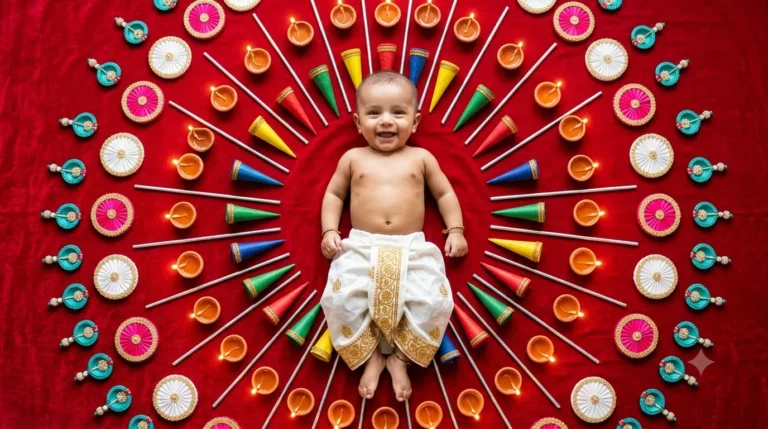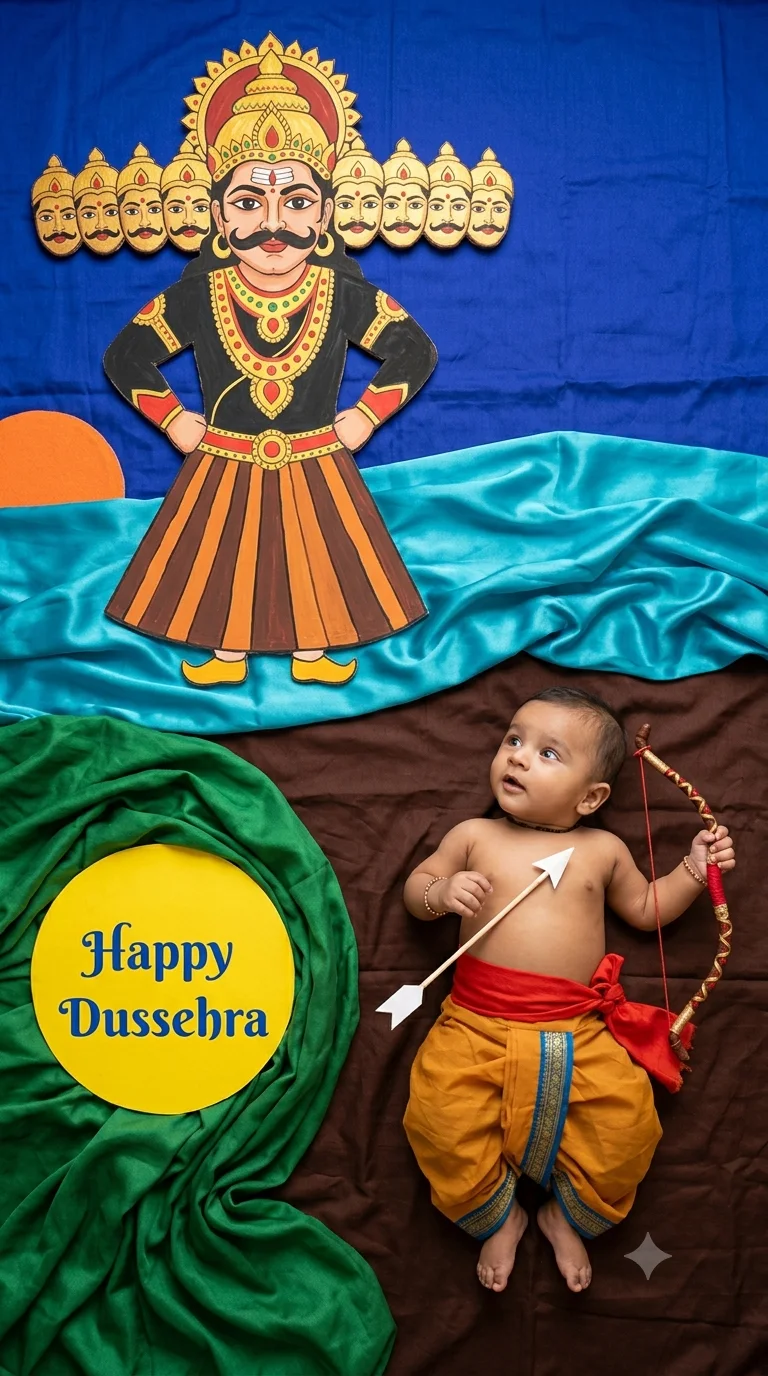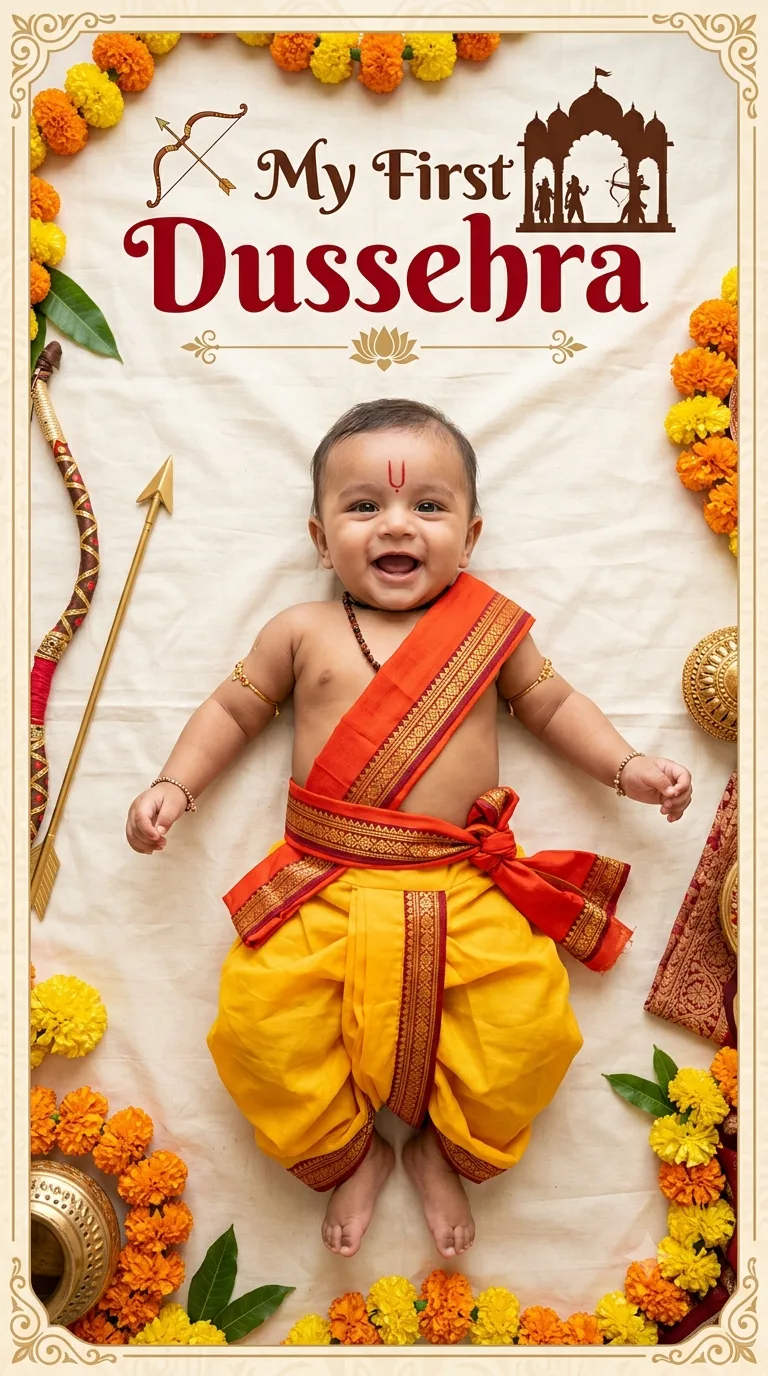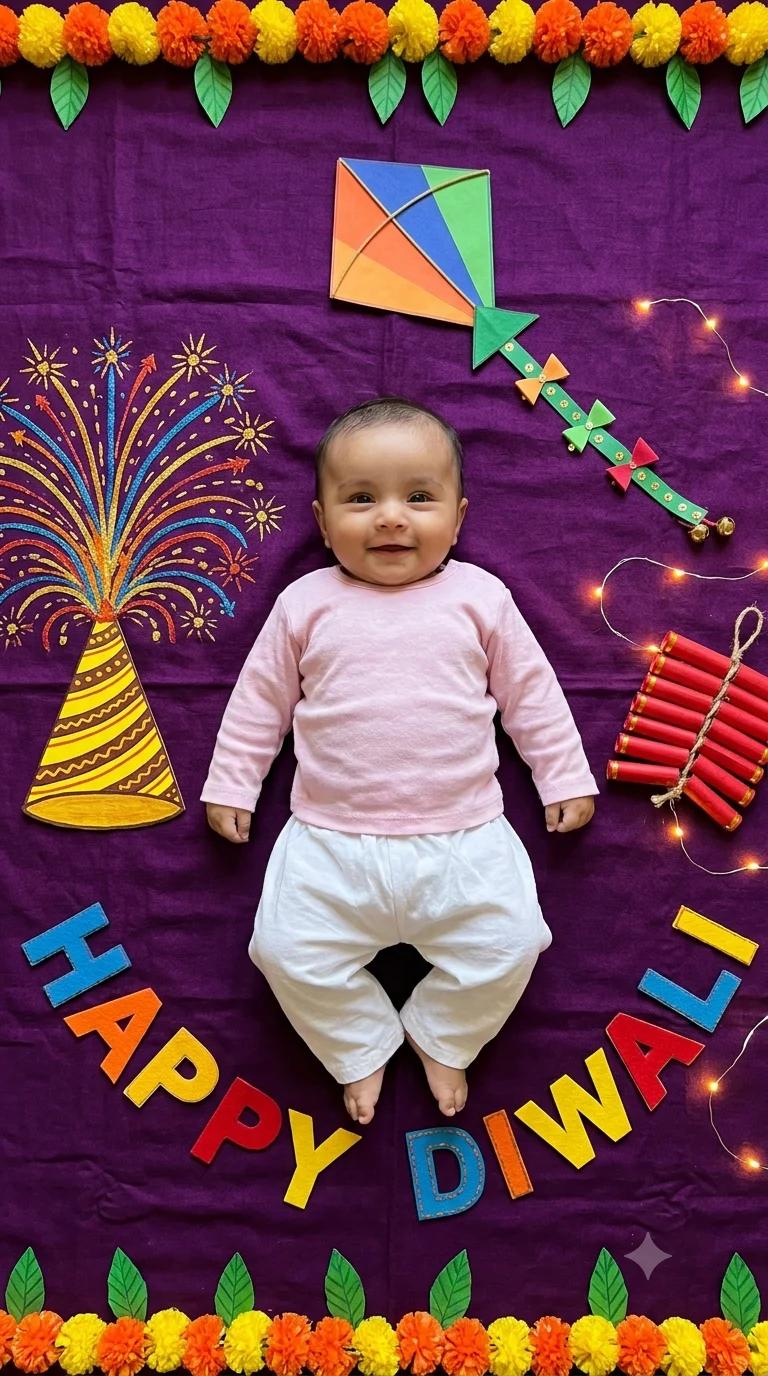
Diwali Photoshoot Baby Boy Gemini Prompt!
Baby
Create Image Colorful Diwali Celebration Baby Photoshoot Prompt STRICT FACE IDENTITY COPY DNA Use the uploaded reference image …
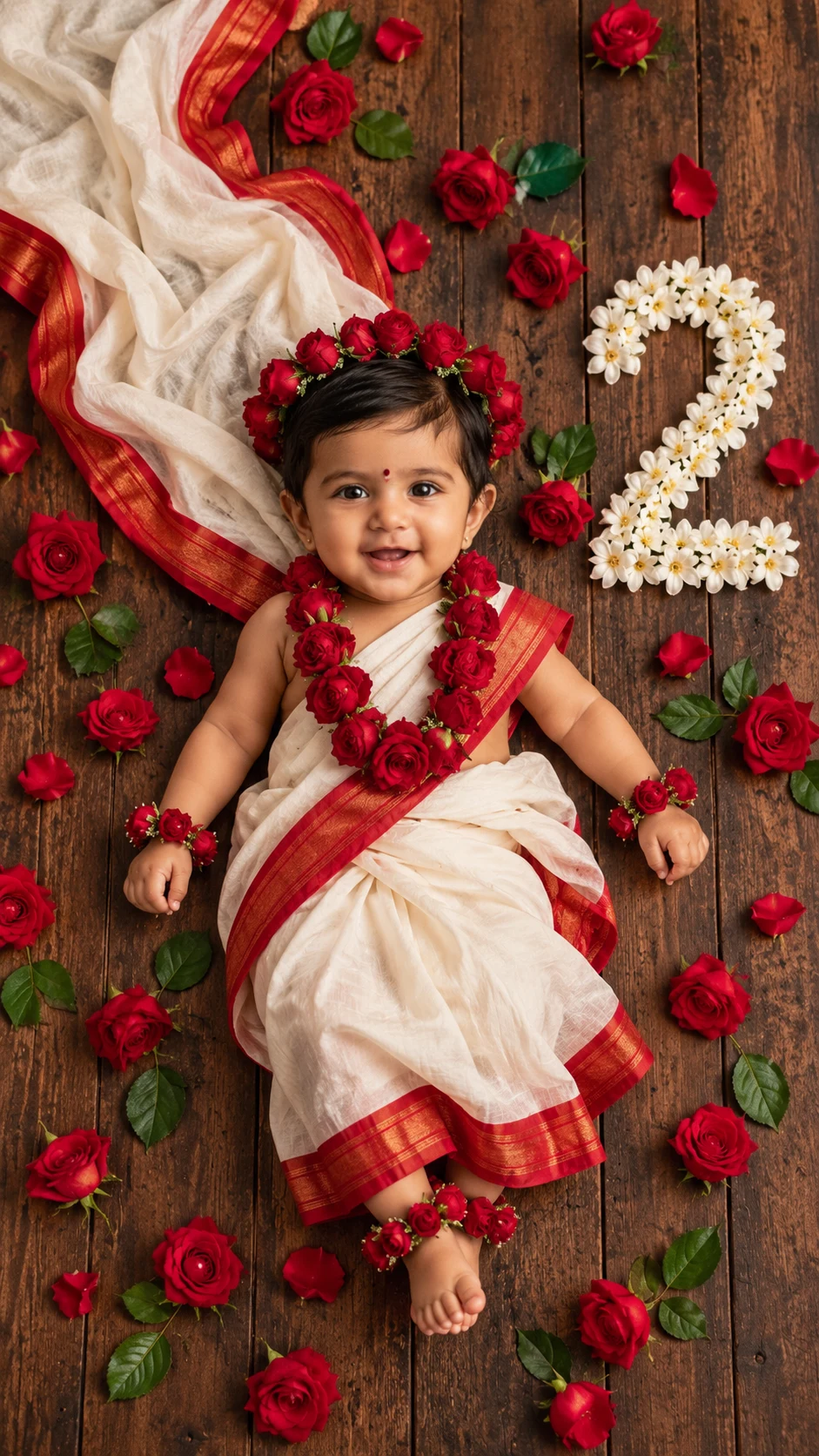
Create Image for two month baby girl photoshoot With White Saree, Red Roses & Floral Number 2 using prompt seen below.
Use the uploaded reference image exclusively as the facial identity source for the baby. Directly copy the exact facial identity of the baby from the uploaded image into the generated image, including the exact head shape, forehead, natural hairline, eyebrow structure, eyelids, eye shape and spacing, nose shape, lips, cheeks, chin, ears, natural skin tone, skin texture, facial proportions, apparent age, and all recognizable facial characteristics. Do not create a similar baby face or a generic baby face. Do not beautify, reshape, age, de-age, or stylize the facial features. The uploaded reference is the facial identity source only; the complete visual composition must be reconstructed from the reference blueprint below.
Reconstruct the reference as a carefully arranged top-down Indian baby photoshoot on a rustic dark-brown wooden plank floor. The baby lies horizontally within the vertical composition, surrounded by scattered fresh red roses and green leaves. The central visual concept is the baby dressed in a miniature traditional white sari with a strong red border, complemented by a red rose garland and floral head decoration. A large number “2” is physically created from small white flowers on the wooden background to the baby's right. The reference is a flat-lay photographic composition and must remain a flat-lay photographic composition.
Position the baby centrally in the lower-middle portion of the frame, lying on their back with the head toward the upper-middle and feet toward the lower-middle. Preserve the vertical arrangement of the entire scene. The baby should occupy the central visual focus while the surrounding roses create a natural decorative frame. Keep the large white fabric flowing diagonally from the upper-left corner toward the baby's head and shoulder area. Keep the floral number “2” clearly visible on the right side of the baby at approximately head-to-waist height.
Reconstruct the baby's natural lying-down pose from the reference. The baby's head faces upward toward the camera, with both arms resting naturally outward beside the body and both hands relaxed. The legs extend naturally downward with the feet visible near the bottom of the frame. Preserve the relaxed infant body geometry and natural proportions. Do not turn the baby sideways, make the baby sit, curl the body, or introduce an artificial pose.
Reconstruct the miniature traditional white Indian sari-style baby outfit with a bold red border. The white fabric should have a lightweight, naturally woven cotton texture with visible fine folds. A broad deep-red border runs along the sari fabric and crosses diagonally over the baby's torso. Preserve the traditional draping arrangement visible in the reference, including the layered white fabric around the lower body. The outfit should look like real lightweight handwoven fabric, not a costume or digitally generated material.
Reproduce the red rose floral styling around the baby. Create a crown-like arrangement of small fresh red roses around the baby's head, positioned naturally against the hair. Add a thick garland made from fresh red roses around the baby's neck and upper chest. Preserve the small red rose floral bracelets around the baby's wrists and the red floral decorations around the ankles/feet. Every flower should appear physically placed, with natural petal structure, slight imperfections, stems where appropriate, and realistic three-dimensional volume.
Use the exact visual character of the rustic dark wooden plank background. Preserve the vertical wood planks, natural grain, knots, seams, warm brown tones, slight variations in wood texture, and realistic surface imperfections. Scatter individual fresh red roses and green leaves around the baby in an intentionally arranged but organic pattern. Do not replace the wood with fabric, marble, grass, a studio floor, or a plain background.
The large number “2” on the right side is a critical part of the visual concept. Recreate it as a clearly recognizable number 2 physically formed from small white flowers, rather than printed, painted, typed, or digitally overlaid text. Preserve its approximate size, position, curved shape, thickness, and orientation from the reference. The individual white flowers should visibly form the complete numeral, with realistic petal clusters and slight natural spacing between flowers. Do not replace the floral number with typography.
Preserve the additional loose white sari fabric extending from the baby's upper-left side toward the top-left corner. It should form a long flowing diagonal shape across the wooden background, with the same white fabric and red edging visible along its outer border. Reproduce its natural folds, curves, overlaps, wrinkles, translucency, and physically realistic placement on the wooden surface. This loose fabric is an important compositional element and must not be omitted.
Use a direct overhead flat-lay camera angle at approximately 90 degrees, positioned directly above the entire arrangement. The camera must look straight downward without noticeable perspective distortion. Preserve the complete arrangement from the upper flowing fabric to the baby's feet and the surrounding flowers. The visual geometry should feel like a professionally photographed overhead baby photoshoot.
Simulate a professional full-frame camera with approximately a 50mm lens mounted directly overhead at a sufficient camera height to capture the complete vertical arrangement without cropping important elements. Maintain natural proportions and minimal lens distortion. Keep the baby, wooden texture, floral number, roses, and fabric sharply detailed across the composition.
Use soft, evenly diffused overhead lighting that illuminates the baby, white sari, flowers, and wooden surface naturally. Preserve gentle shadows beneath the baby, roses, fabric folds, and floral number so that every element maintains realistic three-dimensional depth. Avoid harsh directional shadows, dramatic colored lighting, artificial studio gradients, or excessive highlights.
Preserve the strong visual contrast between the deep warm brown wooden background, pure white sari fabric, vivid red roses, green leaves, and baby's natural skin tones. Keep the image warm, traditional, elegant, intimate, and photorealistic. The red-and-white combination should remain visually dominant without oversaturating the flowers or skin.
There is no conventional written caption or typed text to invent in this reference. The only numeral is the large “2” constructed physically from white flowers. Reproduce it exactly as a physical floral arrangement. Do not add words such as “TWO MONTHS,” “2 MONTHS,” “MONTH,” names, dates, captions, logos, or decorative typography because they are not present in the reference.
Create an ultra-realistic 4K Ultra HD professional baby photography image. Render authentic infant skin texture, fine baby hair, realistic fabric weave, individual rose petals, white flower petals, green leaves, wooden grain, natural shadows, fabric wrinkles, and physically believable object placement. Every decorative element must look physically photographed rather than digitally composited.
Do not change the copied facial identity. Do not redesign the composition. Do not replace the wooden background. Do not remove the large flowing white fabric in the upper-left. Do not change the white-and-red sari styling. Do not replace roses with generic flowers. Do not turn the floral number “2” into typed text. Do not add additional words or captions. Do not introduce baskets, toys, balloons, blankets, furniture, studio props, people, or unrelated decorations. Avoid artificial baby proportions, oversized head, malformed hands or feet, extra fingers, duplicated limbs, floating flowers, plastic skin, excessive retouching, cartoon styling, CGI appearance, or perspective distortion.
Generate one ultra-realistic 4K Ultra HD image in a strict vertical 9:16 aspect ratio, because the uploaded reference is a vertical composition. Faithfully reconstruct the complete visual: the overhead camera viewpoint, centered baby placement, white sari with red border, red rose crown, rose garland, floral wrist and ankle decorations, flowing white fabric extending toward the upper-left, rustic vertical wooden plank background, scattered red roses and green leaves, and the large white-flower number “2” positioned beside the baby. The uploaded reference remains the primary visual source of truth, and no creative redesign or additional theme elements should be introduced.
Explore more prompts related to this one.