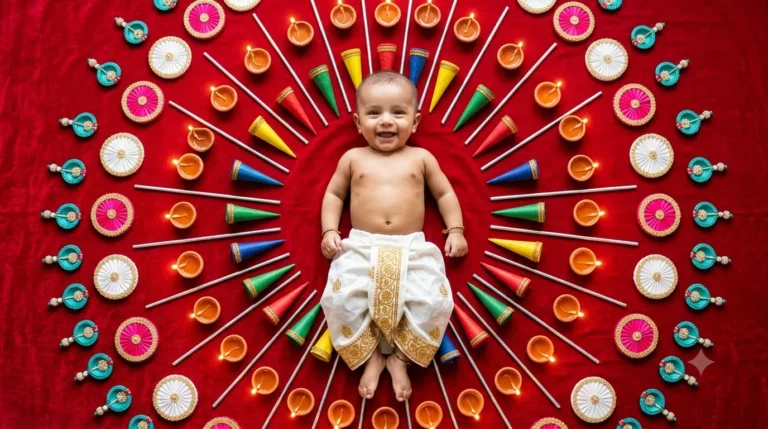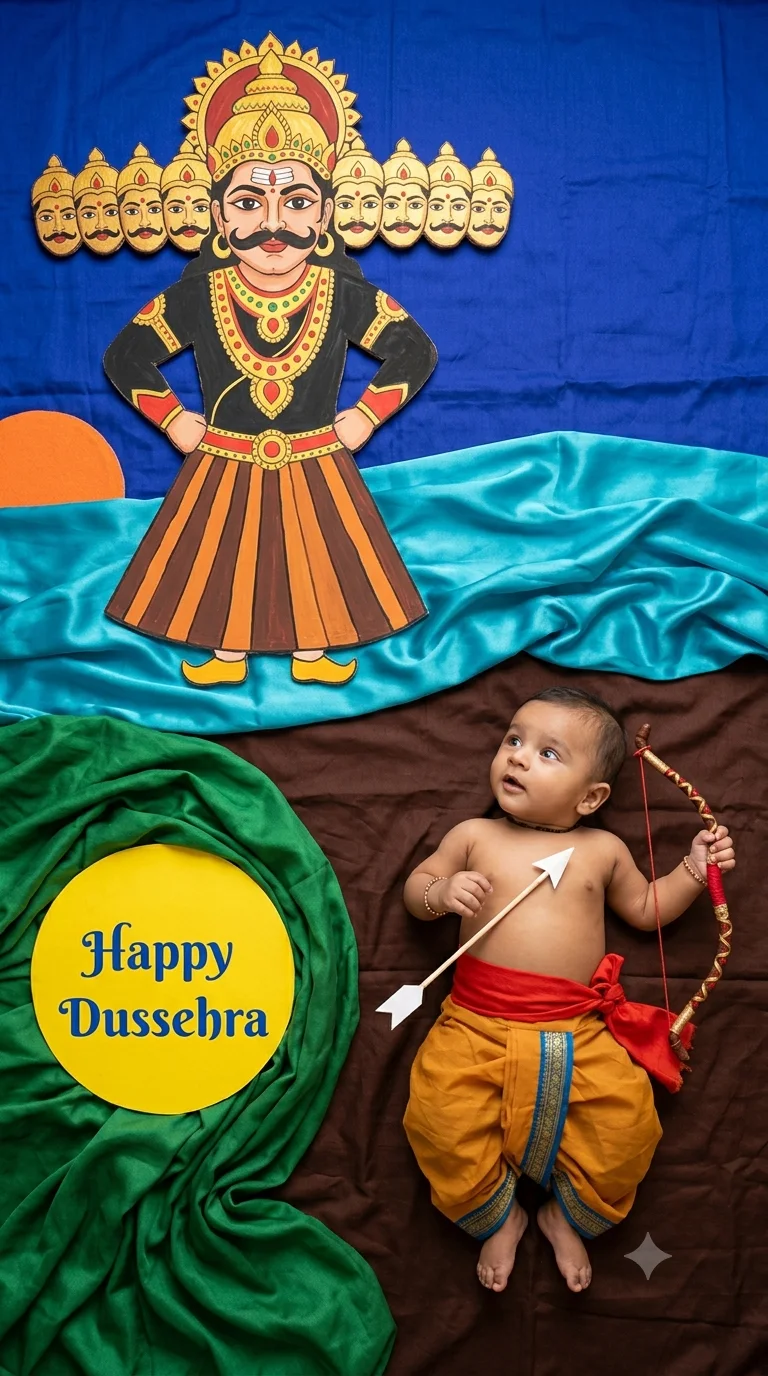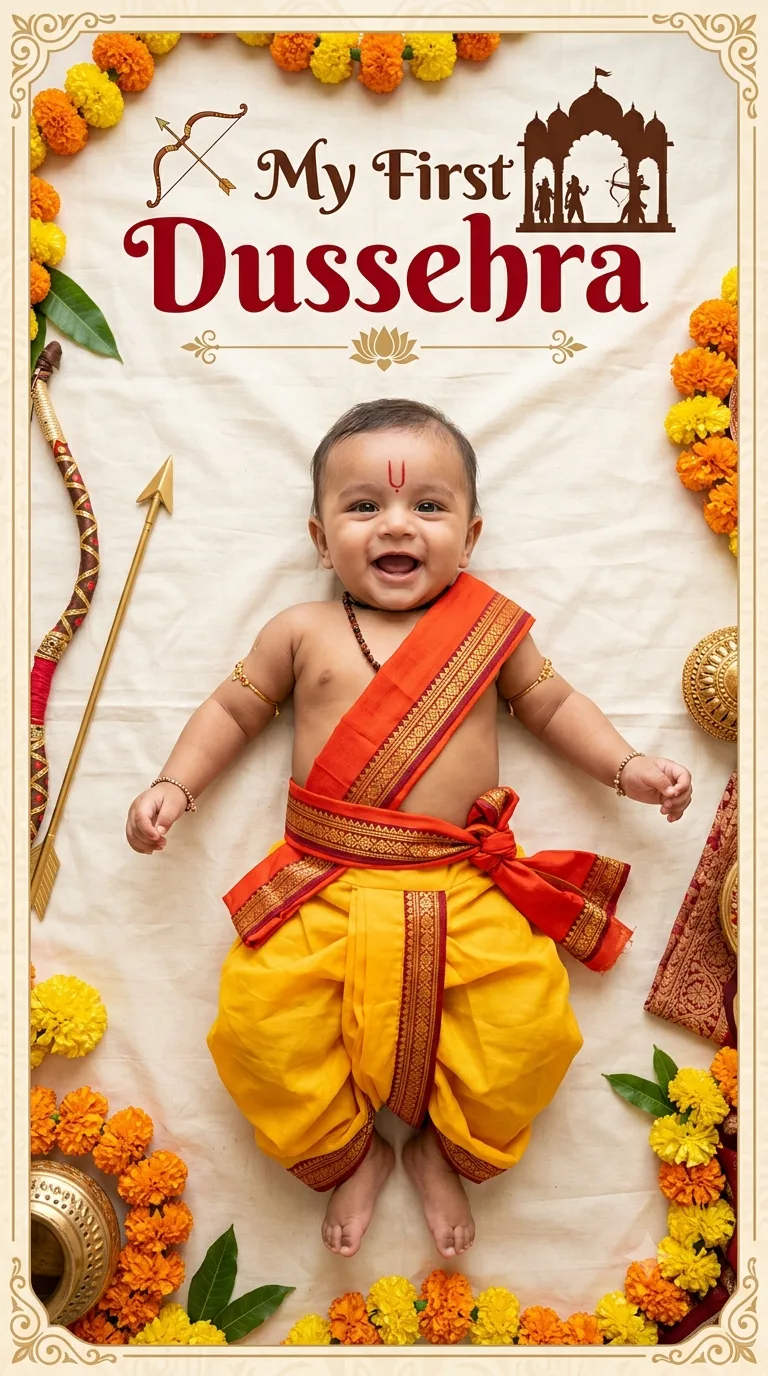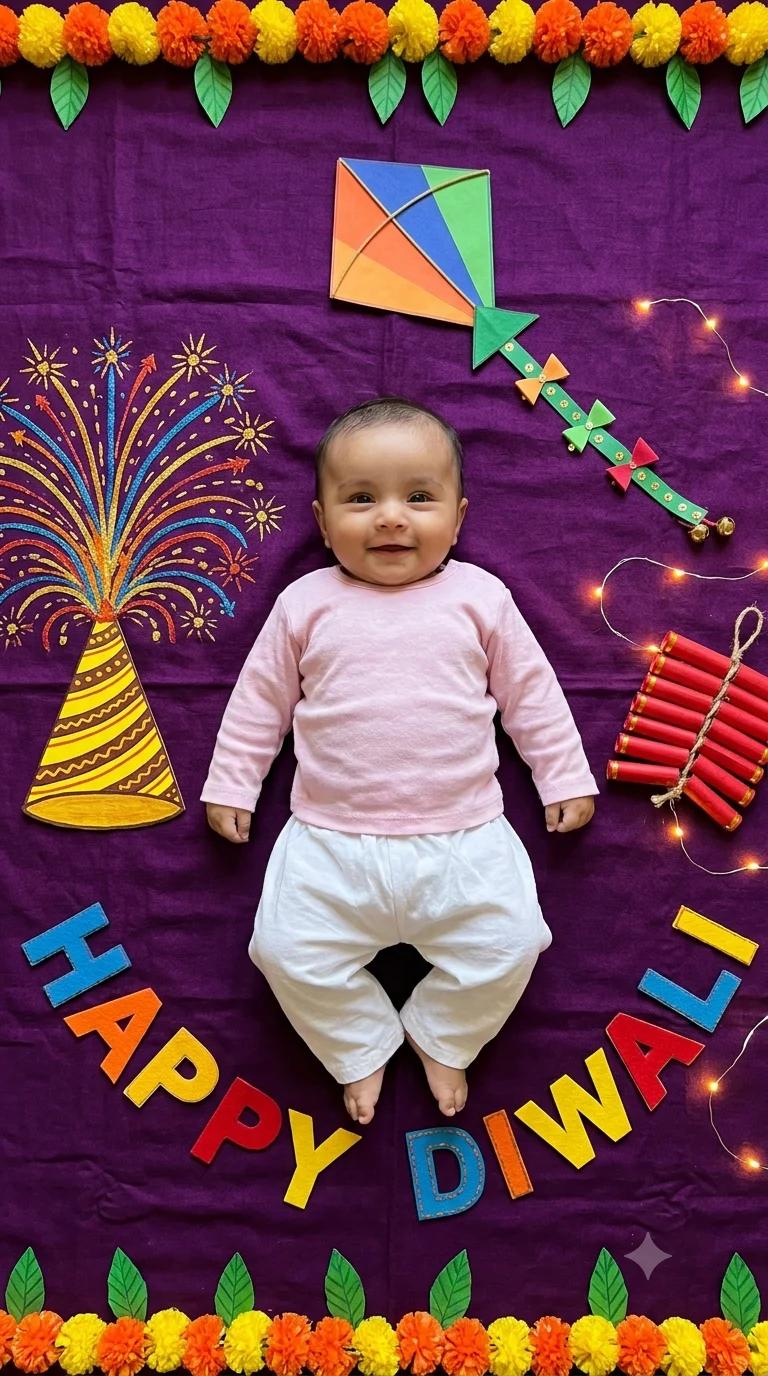
Diwali Photoshoot Baby Boy Gemini Prompt!
Baby
Create Image Colorful Diwali Celebration Baby Photoshoot Prompt STRICT FACE IDENTITY COPY DNA Use the uploaded reference image …
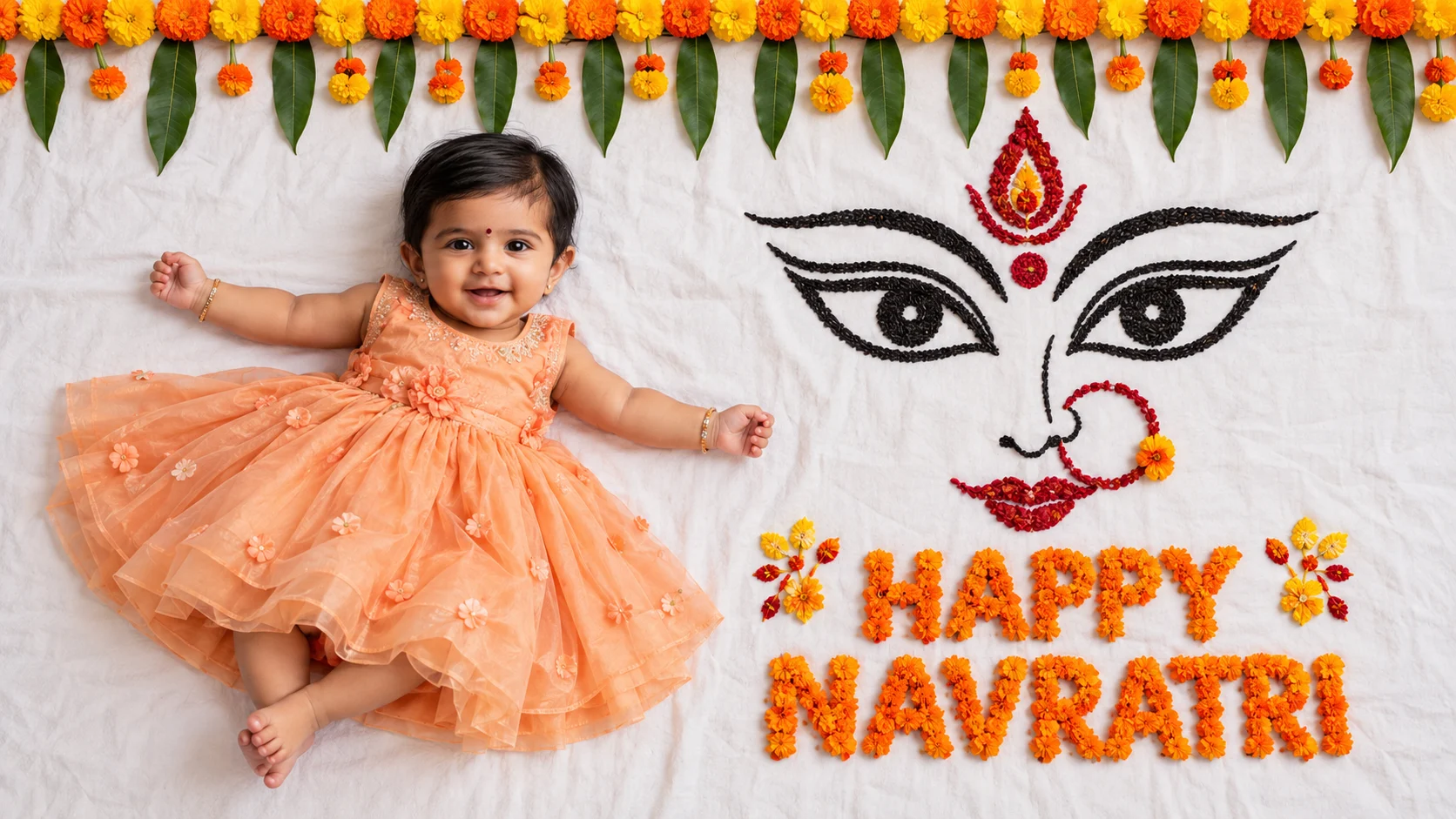
Create Image Navratri Baby Photoshoot With Maa Durga Face Art and Floral Typography
Use the uploaded reference image exclusively as the facial identity source for the baby. Directly copy the exact facial identity of the baby from the uploaded image, including the exact head shape, forehead, natural hairline, eyebrows, eyelids, eye shape and spacing, nose, lips, cheeks, chin, ears, natural skin tone, skin texture, facial proportions, apparent age, and recognizable facial characteristics. Do not create a similar baby, generic baby face, or inspired face. Do not beautify, reshape, stylize, age, de-age, or modify the facial features. The uploaded image is only the facial identity source; everything else must be reconstructed from the visual reference.
Reconstruct the reference as a horizontal overhead Navratri baby photoshoot on a white fabric surface. The baby is positioned toward the left side of the composition, lying horizontally with the head toward the upper-left and the body extending toward the lower-left/center. On the right side is a large simplified artistic representation of Maa Durga's face, followed below by handcrafted orange floral lettering. The top edge contains a traditional Navratri floral decoration with marigold flowers and hanging green leaves. Preserve this exact visual concept and spatial relationship rather than redesigning it into a conventional portrait.
Keep the baby clearly separated from the Maa Durga artwork. The baby occupies the left portion of the white fabric, while the Maa Durga face occupies the central-right portion. Preserve the substantial clean white negative space between and around the elements. The Maa Durga face should be large enough to balance the baby visually but must remain a flat decorative artwork placed on the fabric. Keep the floral text beneath the face and preserve the top decorative border across the width.
Reconstruct the baby's exact overall body placement and pose from the reference. The baby is lying on the back, positioned horizontally, with both arms extended outward in a playful open pose and the legs naturally extended. The baby is looking upward toward the camera with a cheerful expression. Preserve the baby's proportions, body orientation, limb placement, and relationship to the surrounding artwork. Do not introduce a sitting, standing, curled, or different pose.
Dress the baby in the same visual style as the reference: a soft peach/orange traditional-looking baby dress with a sleeveless upper portion and a full, flowing skirt. Preserve the warm orange-peach color, lightweight fabric appearance, simple festive styling, and natural folds of the dress. Do not add jewelry, headwear, props, or additional styling that is not visible in the reference.
Reconstruct the large stylized Maa Durga face artwork positioned to the right of the baby. The face consists of elegant black curved eyebrows/eye outlines, large expressive almond-shaped eyes, a central red decorative bindi/forehead symbol, a small red ornamental nose-ring/nose detail, and a simple red curved mouth/lip element.
This artwork must remain a flat handcrafted decorative design on the white fabric, not a realistic human face and not a three-dimensional statue. Preserve the simple line-art aesthetic, black-and-red color combination, approximate scale, facial symmetry, and placement shown in the reference. Do not reinterpret the artwork into a detailed portrait of a goddess.
The decorative elements and lettering should retain the same handcrafted physical appearance visible in the reference. Where the reference uses orange floral material for the decoration and lettering, recreate it using small real marigold flowers, petals, or closely arranged floral pieces, physically placed on the white fabric. Preserve the uneven handmade edges and individual floral texture.
Do not turn the artwork into smooth digital graphics. The decorative elements should look manually arranged for a real baby photoshoot.
Along the very top edge of the white fabric, recreate the horizontal festive toran. Preserve the dense row of orange and yellow marigold flowers running from left to right, with regularly spaced hanging green leaves pointing downward. Keep the decoration close to the upper edge and preserve its simple horizontal structure.
The flowers should appear fresh and physically attached to the top decoration, with natural petal detail and slight irregularity.
The text is a core visual element and must be reconstructed carefully. The reference visibly contains the English wording:
“HAPPY NAVRATRI”
Reproduce exactly this wording, in uppercase, with the same two-line arrangement: HAPPY on the first line and NAVRATRI on the second line. Do not translate it, change spelling, add words, remove words, or substitute another greeting.
The lettering should be physically handcrafted from small orange marigold flowers/petals or granular floral pieces, matching the handmade floral appearance of the reference. Preserve the approximate letter size, spacing, line arrangement, orange color, irregular natural edges, and placement below the Maa Durga face. The text must remain clearly readable.
Use a clean white cotton fabric sheet covering the entire composition. Preserve subtle fabric folds, wrinkles, seams, and natural textile texture. The baby, Maa Durga face artwork, floral lettering, and toran should all appear physically arranged on this fabric surface.
Do not replace the fabric with a studio floor, marble, colored backdrop, grass, digitally smooth white background, or another material.
Use a perfectly overhead 90-degree flat-lay camera angle, looking directly down at the complete arrangement. Because the reference is horizontal, preserve the wide horizontal visual relationship between the baby on the left and the decorative artwork on the right. Keep the entire arrangement visible within the frame.
Simulate a professional full-frame camera positioned directly above the setup with approximately a 50mm lens or equivalent low-distortion focal length. Maintain natural proportions and minimal perspective distortion. Camera height must be sufficient to include the complete top toran, baby, Maa Durga face, and bottom floral text without cropping.
Use soft, bright, evenly diffused overhead lighting. Preserve gentle natural shadows underneath the baby, dress folds, flowers, leaves, and handcrafted decorations. Avoid dramatic directional lighting or harsh shadows. The white fabric should remain bright and clean while retaining realistic textile detail.
Preserve the reference palette of white, orange, yellow, green, black, and red, with the peach/orange baby dress acting as a warm secondary color. The overall mood should be festive, devotional, joyful, simple, traditional, and handcrafted. Keep colors natural and avoid excessive saturation or artificial cinematic grading.
The final image must look like a real physical baby photoshoot. Show realistic cotton fabric fibers and folds, natural baby skin, authentic dress texture, individual marigold petals, real green leaves, and slightly irregular handcrafted decorative artwork. The Maa Durga face and text should look physically placed on the fabric rather than digitally overlaid.
Create an ultra-realistic 4K Ultra HD professional overhead baby photograph. Preserve fine skin texture, individual hair strands, realistic fabric weave, flower-petal details, natural shadows, and physically believable object placement. Avoid an AI-generated illustration or overly polished CGI appearance.
Do not change the baby's facial identity. Do not change the baby's pose or body orientation. Do not move the baby to the center. Do not replace the Maa Durga face with a realistic goddess portrait, statue, idol, or different artwork. Do not remove the black eye artwork, red forehead symbol, red nose detail, or red mouth. Do not replace the floral “HAPPY NAVRATRI” lettering with digital typography. Do not change the wording or spelling. Do not remove the top marigold toran or hanging leaves. Do not add unrelated props, jewelry, furniture, people, scenery, temples, costumes, or decorative elements. Avoid incorrect text, malformed letters, excessive flowers, unrealistic hands, distorted baby anatomy, cartoon styling, CGI appearance, and angled camera perspective.
Determine the aspect ratio from the uploaded reference: the reference is horizontal, so generate strictly in 16:9. Create one ultra-realistic 4K image faithfully reconstructing the complete visual: baby lying horizontally on the left in a peach/orange dress, white cotton fabric background, Maa Durga's simplified black-and-red face artwork on the right, handcrafted orange floral “HAPPY NAVRATRI” text below it, and the marigold-and-green-leaf toran running across the top. The reference is the primary source of truth, and no creative redesign or unrelated visual interpretation should be introduced.
Explore more prompts related to this one.