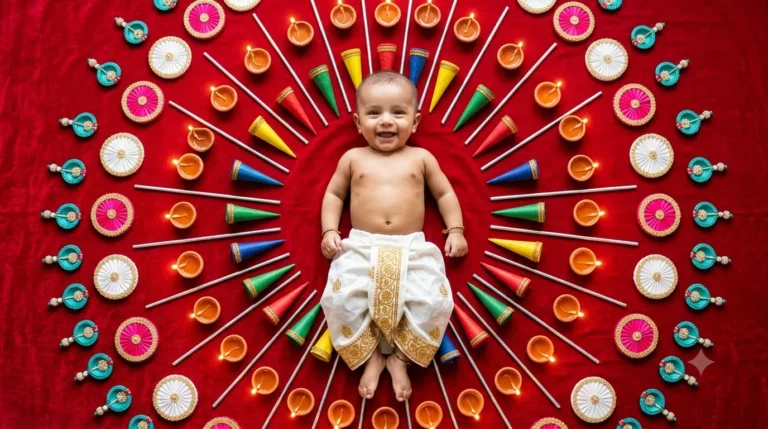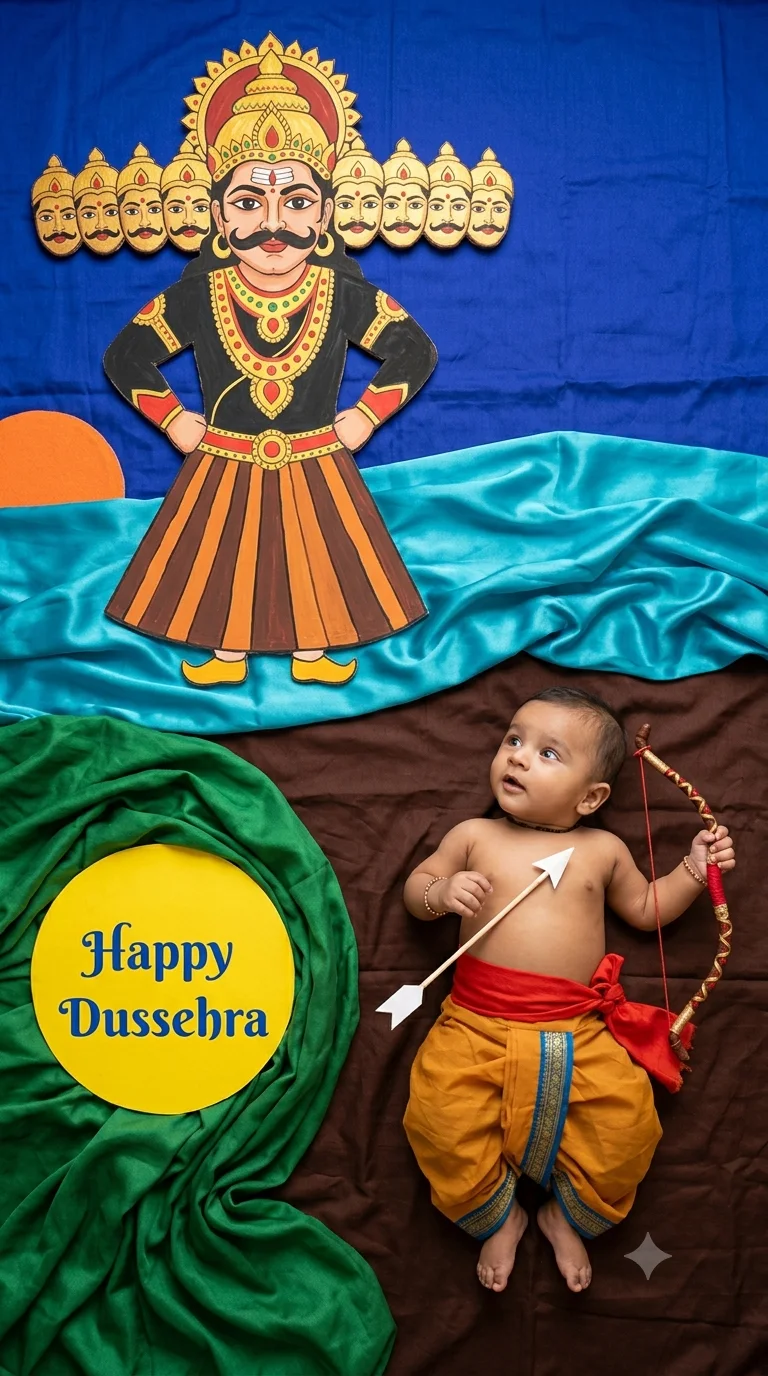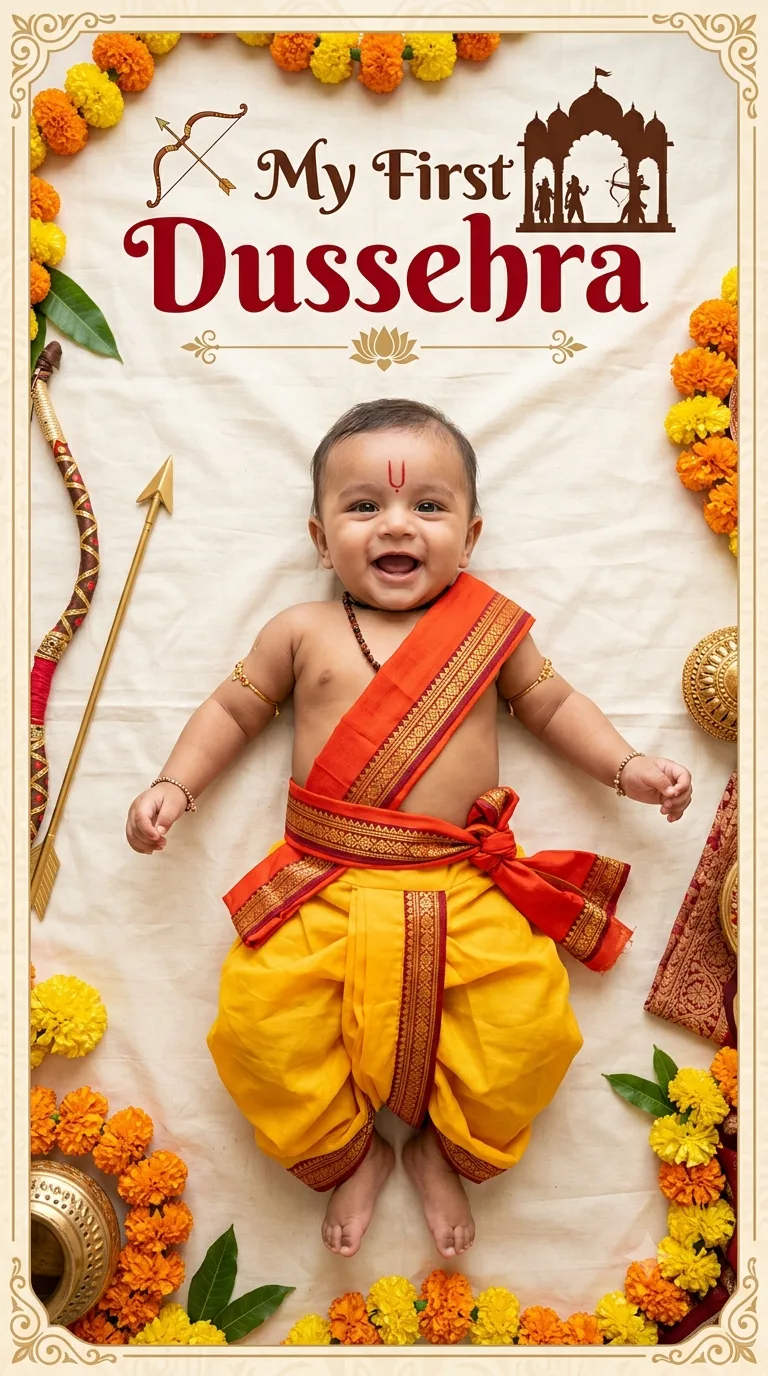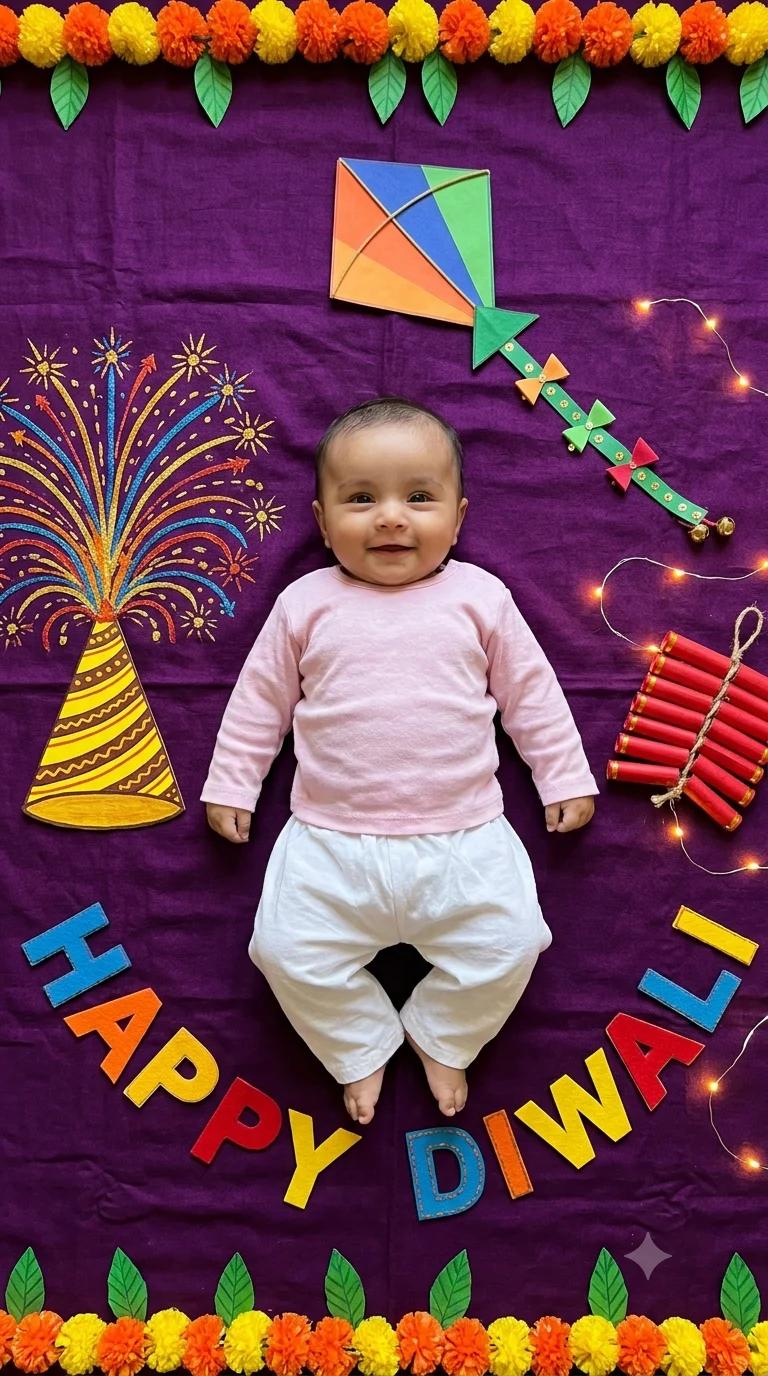
Diwali Photoshoot Baby Boy Gemini Prompt!
Baby
Create Image Colorful Diwali Celebration Baby Photoshoot Prompt STRICT FACE IDENTITY COPY DNA Use the uploaded reference image …
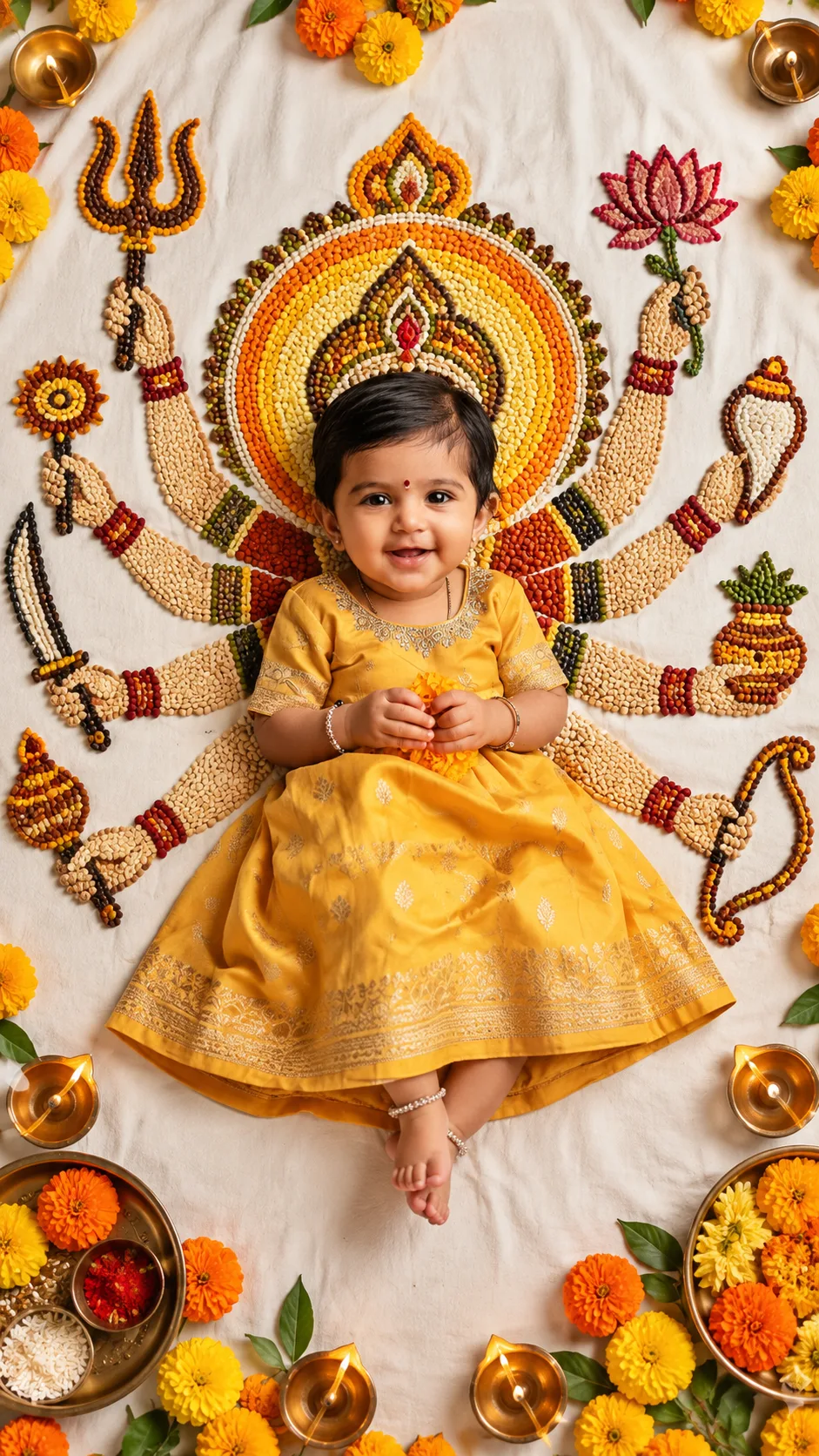
Create Image for Navratri Baby Photoshoot With Grain-Crafted Multi-Arm Maa Durga Art using prompt seen below
Use the uploaded reference image exclusively as the facial identity source for the baby. Directly copy the exact facial identity of the baby from the uploaded image, including the exact head shape, forehead, natural hairline, eyebrow structure, eyelids, eye shape and spacing, nose shape, lips, cheeks, chin, ears, natural skin tone, skin texture, facial proportions, apparent age, and every recognizable facial characteristic. Do not create a similar baby face, generic baby face, or inspired face. Do not beautify, reshape, age, de-age, stylize, enlarge the eyes, modify the nose, or alter any facial feature. The uploaded image is used only for exact facial identity copying; every other element must be reconstructed from the reference visual.
Reconstruct the reference as a carefully handcrafted Navratri baby photoshoot featuring a symbolic multi-armed Maa Durga composition created around the baby. The baby is positioned at the center of a white fabric surface, while numerous arms radiate outward behind the baby to visually form the many-armed divine figure. The crucial visual technique is that the surrounding multi-arm artwork is physically created using grains arranged directly on the fabric, rather than being painted, digitally illustrated, printed, or generated as ordinary realistic human arms. Preserve this handcrafted grain-art concept as one of the primary visual features of the reference.
Place the baby exactly in the center of the vertical flat-lay composition, lying on their back with the head toward the upper-middle and feet toward the lower-middle. The grain-created multi-arm artwork expands symmetrically outward from behind the baby, forming a large radial composition. A circular floral and decorative halo remains directly behind the baby's head. Preserve the surrounding ritual objects, flowers, tridents, diyas, and the handcrafted text at the bottom. The complete arrangement should read visually as a Maa Durga-inspired composition surrounding the baby.
Reconstruct the baby's natural supine pose from the reference. The baby lies comfortably on the back, looking directly upward toward the overhead camera with a cheerful open-mouth smile. Both arms remain naturally positioned close to the body, with relaxed infant hands. The legs extend downward naturally with both feet visible. Do not give the baby additional arms or alter the baby's anatomy.
Dress the baby in the same traditional festive outfit visible in the reference: a rich red and deep maroon Indian baby lehenga/chaniya-choli style outfit with elaborate gold embroidery, patterned borders, traditional textile motifs, and layered decorative detailing. Preserve the red-and-gold festive appearance, the structured embroidered bodice, decorative waist area, and richly patterned lower garment. The clothing should look like real handcrafted Indian textile.
This is the most important reconstruction detail. The entire multi-hand / multi-arm Maa Durga artwork surrounding the baby must be physically formed from grains carefully arranged on the white fabric. Do not generate ordinary photographic human arms emerging from the baby. Recreate each arm as a handcrafted flat-lay grain composition, using small individual grains placed closely together to create the silhouettes of arms, hands, fingers, and sleeves. Preserve the visible grain texture, irregular edges, individual grain particles, color variations, and handmade arrangement.
The grain artwork should create multiple arms radiating outward in different directions behind the baby, with approximately the same number, spacing, orientation, scale, and radial symmetry visible in the reference. The arms should visually resemble a stylized multi-armed Maa Durga arrangement while clearly remaining flat grain artwork laid on the fabric. Do not turn the grain silhouettes into realistic 3D arms.
Use grains as the physical construction material exactly as indicated by the reference. The grains should remain individually visible at close inspection, creating dense textured shapes. Preserve the different grain colors used to distinguish the arms, sleeves, outlines, and decorative regions. Do not replace the grain material with flowers, paint, colored sand, clay, fabric, digital graphics, or smooth vector shapes. The edges should have the subtle irregularity of grains manually arranged by hand.
Where the reference uses darker or lighter grain sections to define sleeves and arms, reproduce those tonal separations through differently colored or naturally contrasting grains rather than painted gradients. Preserve the handcrafted, tactile quality throughout.
Reconstruct the hands at the ends of the grain-created arms using carefully arranged grains. Preserve their individual finger shapes and approximate orientations from the reference. Some of the symbolic hands hold or accompany traditional objects, including tridents and other devotional implements. These objects should remain physically arranged as part of the flat-lay composition and should not become oversized or visually dominant.
The tridents should retain their recognizable traditional three-pronged shape and remain positioned approximately where they appear in the reference. Preserve the decorative flowers attached around several wrists and objects.
Behind the baby's head, recreate the prominent circular halo using densely arranged orange and yellow marigold flowers. Preserve its circular structure, flower density, layered ring appearance, and approximate size. Keep the small central devotional element inside the halo as visible in the reference. The halo must appear physically assembled from real flowers placed on the white fabric.
Preserve the orange and yellow marigold flowers distributed around the grain-created arms and devotional objects. Flowers should be physically placed around wrists, hands, tridents, and other decorative areas. Include the scattered petals and small floral elements visible throughout the composition. Keep the flowers realistic, three-dimensional, slightly irregular, and naturally arranged.
Reconstruct the small traditional diyas and devotional vessels placed around the composition, particularly around the left and right sides. Preserve their approximate sizes, locations, orientation, and relationship to the baby. They should look like real clay or traditional metal puja objects physically placed on the fabric. Do not introduce modern objects or unrelated props.
Use the same white cotton fabric sheet as the complete background. Preserve its visible folds, wrinkles, seams, slight texture, and natural unevenness. The grain artwork, flowers, diyas, tridents, and baby must all appear physically arranged on this fabric surface. Do not replace it with a smooth digital background or another material.
The bottom of the reference contains the clearly visible wording “JAI MATA DI”. Reconstruct this exact wording without changing, translating, correcting, shortening, or adding words. The letters should be physically handcrafted from small colored grains and/or the same granular decorative material used in the composition, arranged directly on the white fabric.
Preserve the exact uppercase wording, approximate letter size, horizontal placement, spacing, baseline, individual letter shapes, colors, grain texture, irregular handmade edges, and reading order. The text must remain clearly legible as JAI MATA DI. Do not use computer typography, printed lettering, painted lettering, or a smooth digital font.
Use a perfectly 90-degree overhead flat-lay camera angle, directly above the entire arrangement. The camera must look straight downward with no noticeable perspective tilt. Capture the complete baby, grain-created multi-arm artwork, halo, devotional objects, scattered flowers, and bottom text as one coherent flat-lay composition.
Simulate a professional full-frame camera with approximately a 50mm lens mounted directly above the arrangement at sufficient height to capture the complete composition without cropping the outer arms, props, or bottom text. Maintain minimal lens distortion and realistic proportions. Keep the individual grains, flowers, baby, fabric, and devotional objects sufficiently sharp to communicate their physical texture.
Use soft, evenly diffused overhead lighting across the entire white fabric. Preserve subtle natural shadows underneath the baby, flowers, grain arrangements, diyas, and props so that each physical element remains visually separated from the fabric. Keep the lighting bright and clean while retaining realistic dimensionality.
Preserve the reference palette of white, red, maroon, orange, yellow, gold, green, and natural grain tones. The image should feel devotional, festive, joyful, handcrafted, traditional, and warm. Keep the baby's skin tone natural and avoid excessive saturation. Maintain strong visual contrast between the colorful grain artwork and the white fabric.
The grain artwork must remain visibly tactile. Individual grains should be discernible, especially along the edges of the arms, hands, sleeves, and decorative shapes. Flowers should show individual petals and natural volume. The white fabric should show cotton fibers, wrinkles, and folds. Metal or clay devotional objects should show realistic surfaces and shadows. Everything must appear physically placed and photographed from above.
Do not change the copied facial identity. Do not give the baby multiple arms. The multi-arm artwork must remain a separate grain-created flat-lay design behind and around the baby. Do not turn the grain artwork into realistic human arms. Do not replace grains with flowers, paint, sand, fabric, CGI, or smooth digital illustration. Do not remove the circular marigold halo, tridents, diyas, devotional objects, flowers, or bottom text. Do not change “JAI MATA DI” into different wording. Do not add extra captions, names, dates, logos, or modern objects. Avoid malformed baby anatomy, extra fingers on the baby, duplicated limbs, floating objects, smooth vector-like grain shapes, unrealistic grain particles, plastic skin, cartoon styling, CGI appearance, or angled camera perspective.
Generate one ultra-realistic 4K Ultra HD image in a strict vertical 9:16 aspect ratio, because the uploaded reference is vertical. Faithfully reconstruct the complete visual arrangement: the baby centered on white cotton fabric, traditional red-and-gold outfit, circular marigold halo, multi-armed Maa Durga artwork physically created from carefully arranged grains, grain-created hands and sleeves, tridents and devotional objects, marigold decorations, diyas, scattered flowers, and the clearly readable handcrafted grain text “JAI MATA DI” at the bottom. The uploaded reference is the primary source of truth, and the grain-based construction of the symbolic artwork is a critical part of the reconstruction.
Explore more prompts related to this one.