Jasmine Girl Flower Portrait Cahtgpt Prompt
Girls
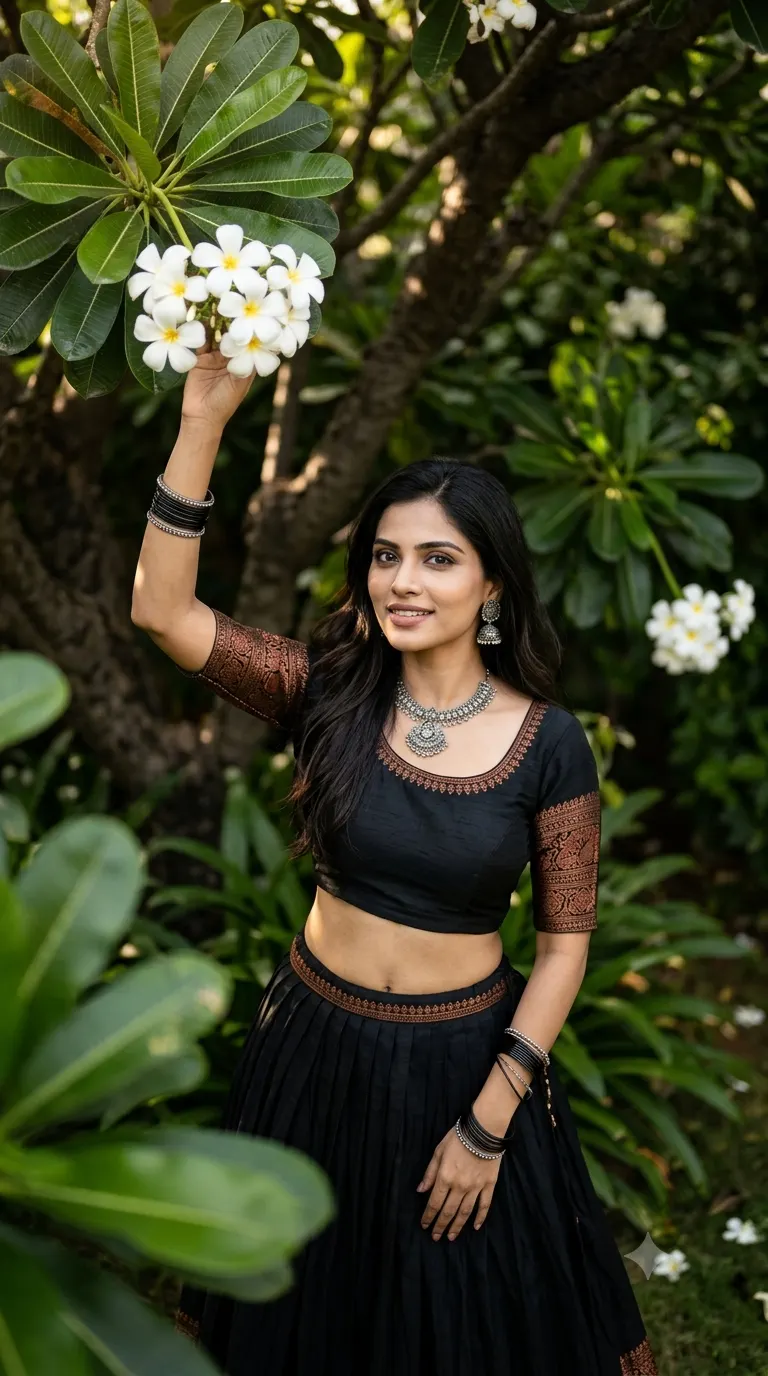
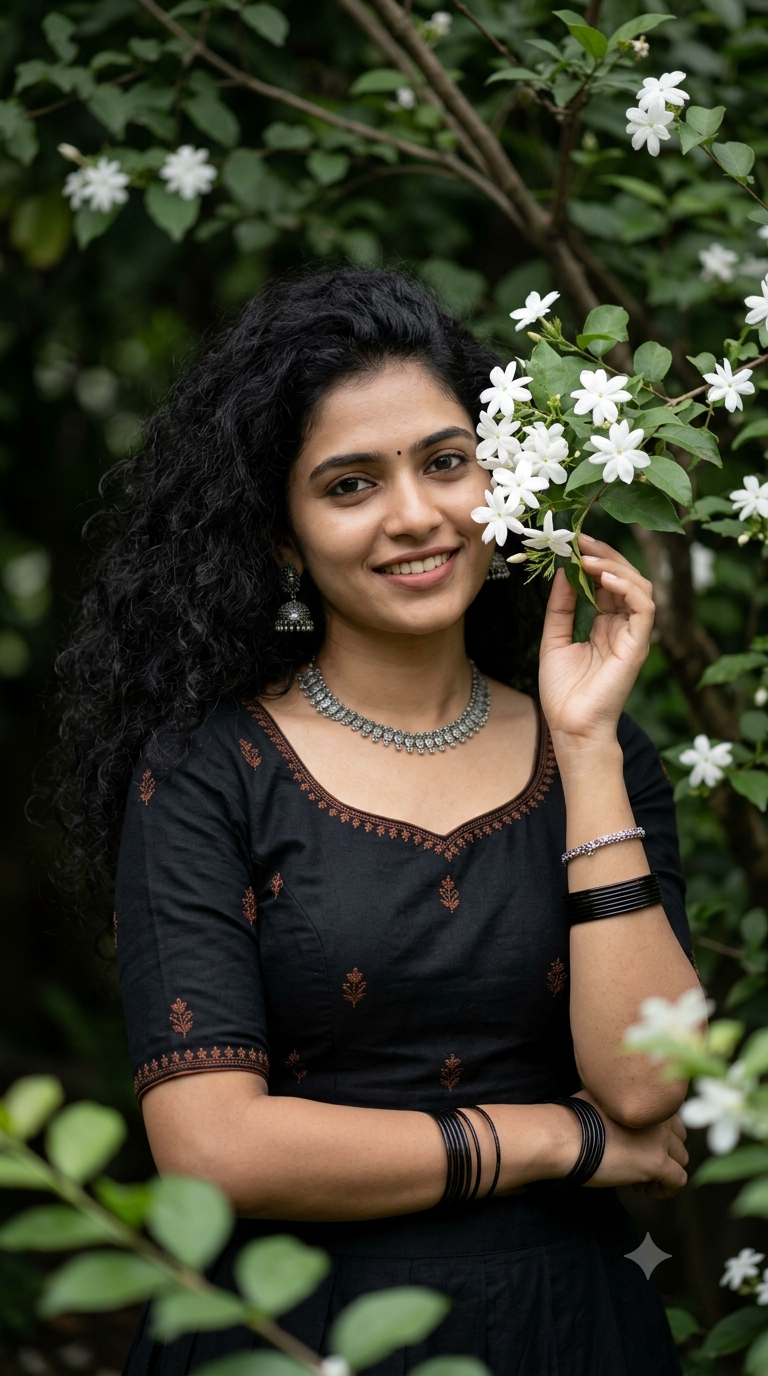
Create Image Realistic Jasmine Flower Portrait using prompt seen below. 1. STRICT FACE IDENTITY COPY DNA Use the …
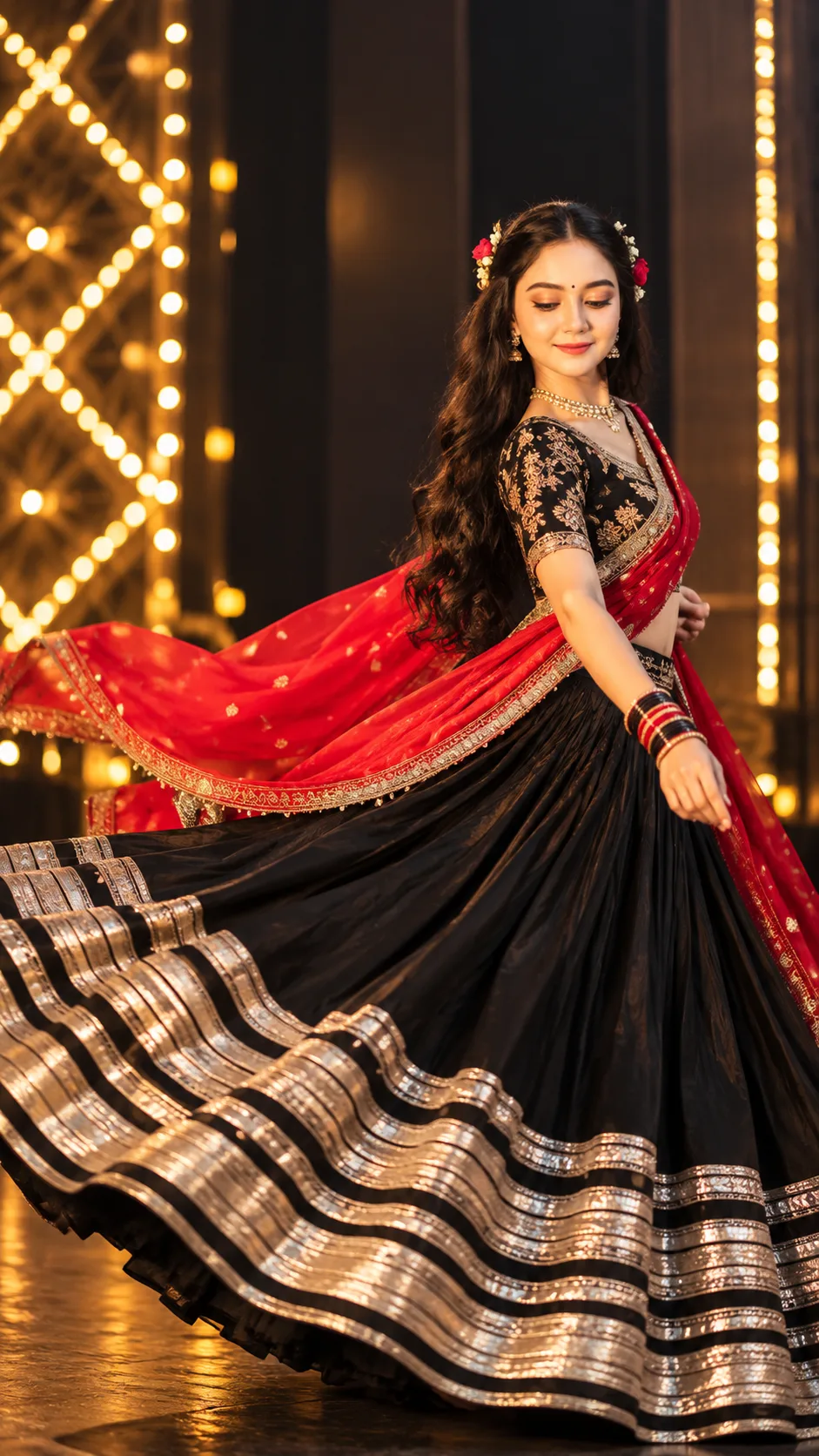
Create Image Of Black & Red Navratri Look Dance Portrait using prompt seen below.
Use the uploaded reference image exclusively as the facial identity source for the woman. Directly copy the exact facial identity of the woman from the uploaded image into the generated image, including her exact head shape, forehead proportions, natural hairline, eyebrow shape and density, eyelids, exact eye shape and spacing, iris appearance, nose bridge and tip, nostril structure, lips, cheeks, jawline, chin, ears, natural skin tone, skin texture, facial proportions, apparent age, and every recognizable facial characteristic. Do not create a similar face, an inspired face, or a generic female face. Do not beautify, reshape, slim, age, de-age, enlarge the eyes, alter the nose, sharpen the jaw, or modify any facial feature. The uploaded image is used only for exact facial identity copying; every other visual element must be reconstructed from the written blueprint below.
Reconstruct the reference as a full-length dynamic Indian Garba/Dandiya dance portrait of a young woman in a flowing black traditional lehenga with prominent silver horizontal borders and a vivid red dupatta. The defining visual feature is the dramatic movement of the large black skirt sweeping outward across the lower half of the frame, creating a wide flowing arc. The woman is captured during a graceful dance movement, looking downward with a soft smile while turning her body. The scene takes place on a dark indoor/stage-like Navratri setting illuminated by warm yellow-white LED lights.
Place the woman slightly right of center while allowing the enormous flowing skirt to extend dramatically toward the left and across the bottom of the frame. Preserve the unusual asymmetrical composition of the reference, with substantial visual movement created by the skirt. Show the woman from head to the complete lower edge of the lehenga. Keep the upper body relatively small compared with the expansive skirt, exactly as in the reference. The illuminated geometric decoration remains on the far left, while a vertical glowing light strip and dark structural panel remain along the right side.
Reproduce the graceful dance pose precisely. The woman stands with her torso turned diagonally away from the camera while her head bends gently downward toward her shoulder. Her eyes are directed downward and she has a soft, joyful smile. One arm extends naturally downward and slightly forward, with the hand relaxed during the dance movement, while the other arm remains closer to her body and is partially integrated with the flowing red dupatta. Preserve the elegant curved posture, slight body twist, relaxed shoulders, and natural dance movement. Do not convert the pose into a static standing fashion pose.
Reconstruct the outfit as a traditional black Gujarati/Rajasthani-inspired Garba lehenga. The blouse/choli is predominantly black with intricate gold or metallic embroidered detailing across the bodice. The lehenga is deep black, extremely wide and heavily flared, with multiple closely spaced horizontal metallic silver bands running around the lower hem. Preserve the layered silver stripe pattern and the smooth dark fabric between the bands. The skirt must appear lightweight enough to billow dramatically during movement while remaining physically realistic.
Reproduce the vivid red dupatta draped around the woman's upper body and flowing backward with the dance movement. It should contain small scattered decorative embellishments and a subtle ornamental border. One section crosses around the waist/upper torso while another section trails outward behind her, creating visible motion. Preserve the contrast between the intense red fabric and the black-and-silver lehenga.
Preserve the woman's long, dark brown hair flowing naturally down her back and over one side of her body. The hair should show realistic individual strands and slight movement caused by the dance. Reproduce the traditional dangling earrings and stacked colorful bangles visible around her wrists. Keep the jewelry elegant and consistent with a Navratri Garba/Dandiya celebration. Do not add unrelated heavy jewelry or headwear.
The flowing skirt is a critical reconstruction element. Reproduce the huge sweeping motion of the lehenga as it expands dramatically toward the lower-left side and curves across the foreground. The silver horizontal borders must follow the curved fabric naturally, becoming visibly stretched and curved by the movement. Preserve realistic fabric weight, folds, tension, motion blur only where physically appropriate, and layered edges. The skirt must look physically captured during a real dance movement rather than digitally shaped.
Reconstruct the dark indoor stage environment exactly in character with the reference. Use a deep charcoal/black backdrop with visible vertical structural panels. On the far left, include a large partially visible geometric LED decoration made from bright warm-white/yellow illuminated lines forming angular curved shapes. On the right, include a tall vertical warm-white LED light strip attached to a dark structural column, with visible cables/wiring consistent with a real event setup. Keep the environment raw and realistic rather than turning it into a polished fantasy festival background.
Preserve the bright yellow/golden floor or stage surface visible beneath the woman. The floor should strongly contrast against the black skirt and dark background. Include subtle realistic surface texture and small imperfections visible around the edges. Do not replace it with a wooden floor, marble floor, colorful Garba stage, grass, or outdoor ground.
Use a professional camera positioned approximately at waist-to-chest height relative to the woman, with a slightly low perspective that emphasizes the enormous sweeping lehenga. Maintain the vertical full-body framing while allowing the skirt to occupy a large percentage of the lower frame. Preserve the reference's slightly tilted/dynamic photographic perspective rather than using a perfectly symmetrical studio composition.
Simulate a professional full-frame camera using approximately a 35mm lens from a moderate distance of roughly 3–4 metres. The moderately wide focal length is important for capturing the complete sweeping skirt and surrounding stage environment without excessive distortion. Use approximately f/2.8–f/4 so the woman remains clearly detailed while the distant background lighting has a gentle photographic softness.
Use the existing warm yellow-white LED lights as major practical light sources. The geometric LED decoration on the left and vertical LED strip on the right should produce visible warm highlights and subtle illumination across the scene. Add soft frontal fill light sufficient to retain realistic facial and outfit detail while preserving the dramatic dark environment. Allow controlled highlights to appear on the silver skirt borders and red dupatta. Do not flatten the scene with bright studio lighting.
Preserve the striking black, silver, red, and warm golden-yellow color palette. The mood should feel energetic, festive, elegant, youthful, and distinctly suited to an Indian Navratri Garba/Dandiya celebration. Maintain rich blacks without crushing all fabric detail, vivid but realistic red fabric, metallic silver highlights, and warm golden practical lighting.
Create an ultra-realistic professional photograph with highly detailed skin texture, realistic individual hair strands, authentic embroidery, physically accurate metallic borders, naturally translucent red fabric, realistic fabric folds, and believable motion. The sweeping lehenga must retain fine textile detail even while moving. Avoid an illustrated, CGI, plastic, or overly processed appearance.
Do not change the copied facial identity. Do not redesign the pose, skirt movement, outfit colors, dupatta placement, stage architecture, LED shapes, floor color, camera perspective, or composition. Do not replace the black lehenga with another outfit. Do not remove the silver horizontal skirt borders. Do not replace the red dupatta with another color. Do not introduce a crowd, temple, outdoor Garba ground, decorative flowers, DJ stage, colorful festival backdrop, or unrelated props. Do not make the dance pose static. Avoid excessive motion blur, distorted hands, extra fingers, malformed feet, unrealistic fabric physics, plastic skin, over-smoothing, excessive saturation, wide-angle body distortion, or artificial CGI lighting.
Generate one ultra-realistic 4K Ultra HD image in a strict vertical 9:16 aspect ratio, faithfully reconstructing the supplied reference as a dynamic traditional Indian Navratri Garba/Dandiya dance portrait. Preserve the exact copied facial identity while keeping every other element as close to the reference as possible: the downward smiling expression, graceful twisted dance pose, long flowing hair, black embroidered blouse, enormous black lehenga with multiple silver horizontal borders, vivid red dupatta, colorful bangles, dark stage environment, glowing geometric LED decoration on the left, vertical LED strip on the right, visible stage wiring, bright yellow floor, dramatic skirt movement, camera perspective, framing, lighting, and overall visual balance. The reference image remains the primary visual source of truth, with no creative redesign or unnecessary additions.
Explore more prompts related to this one.