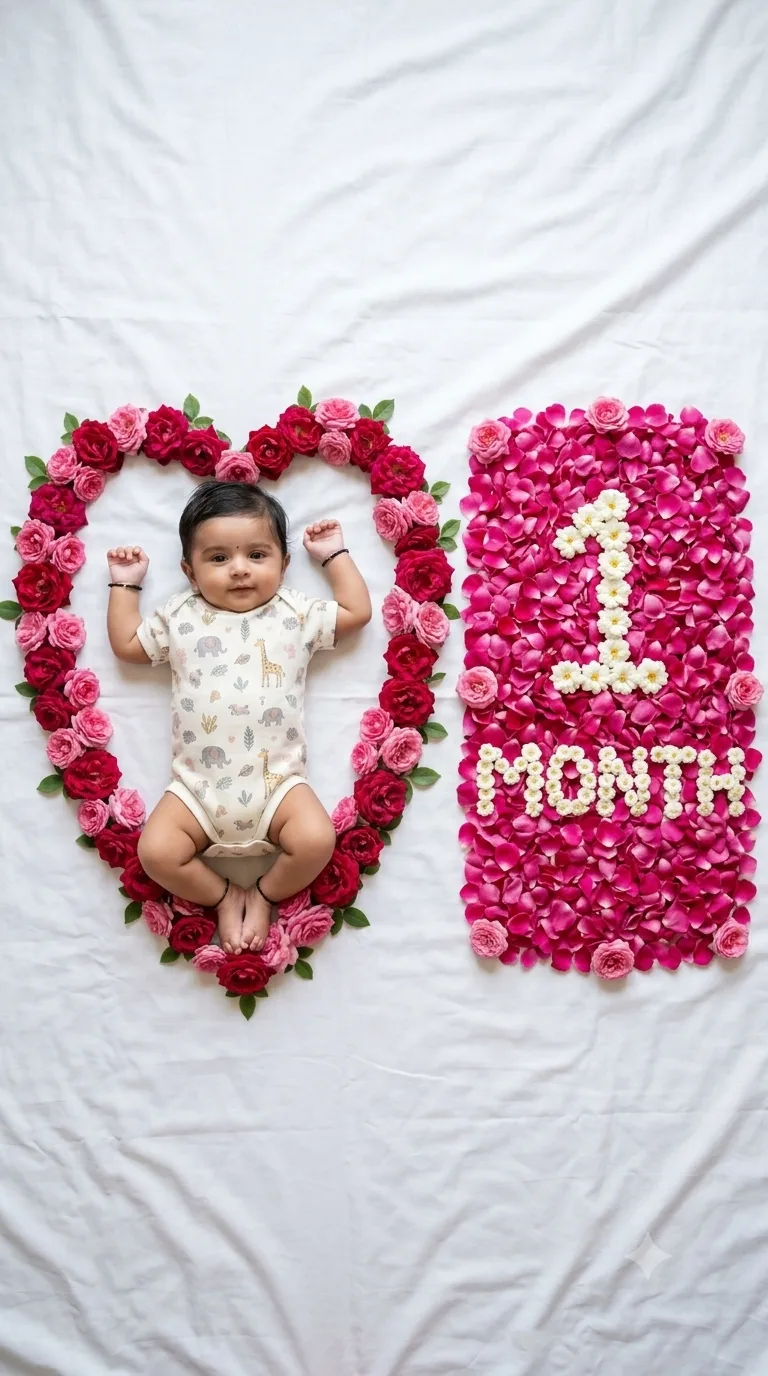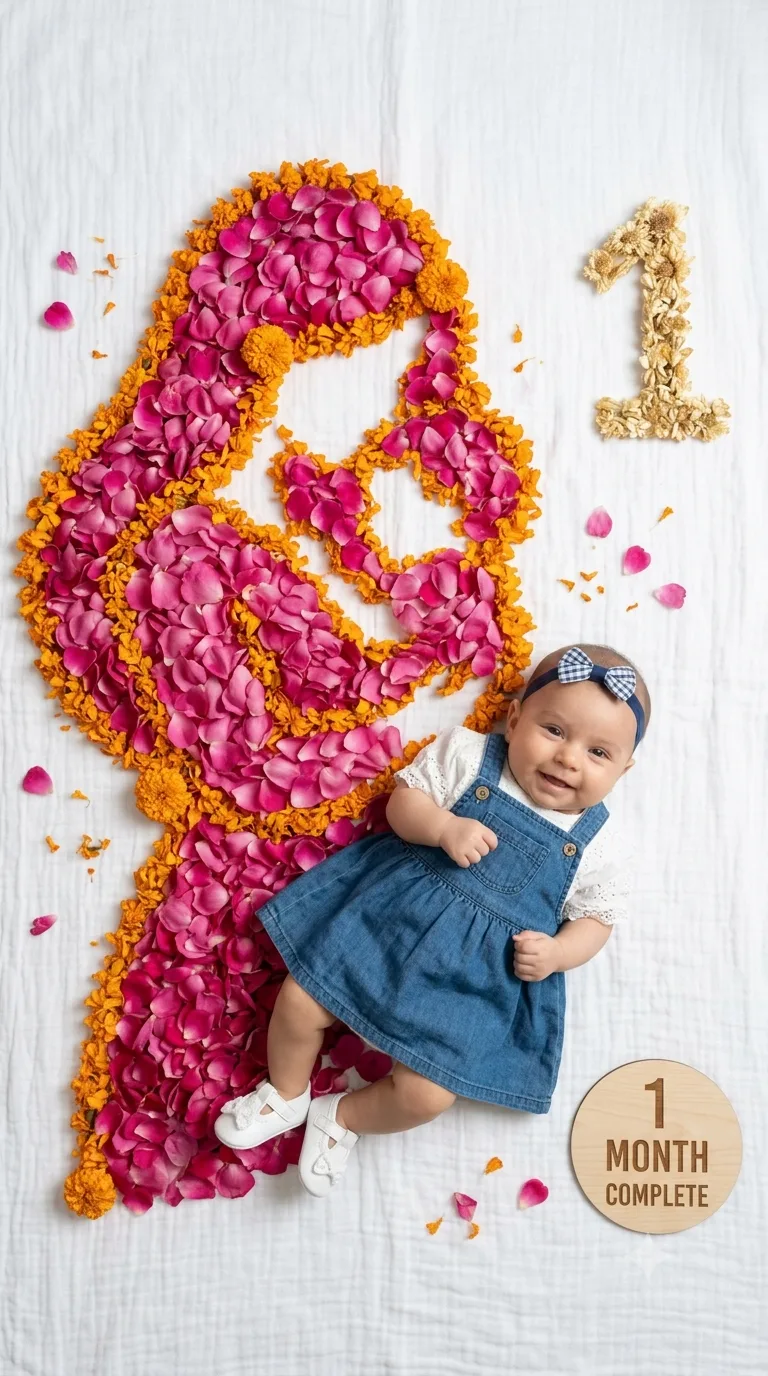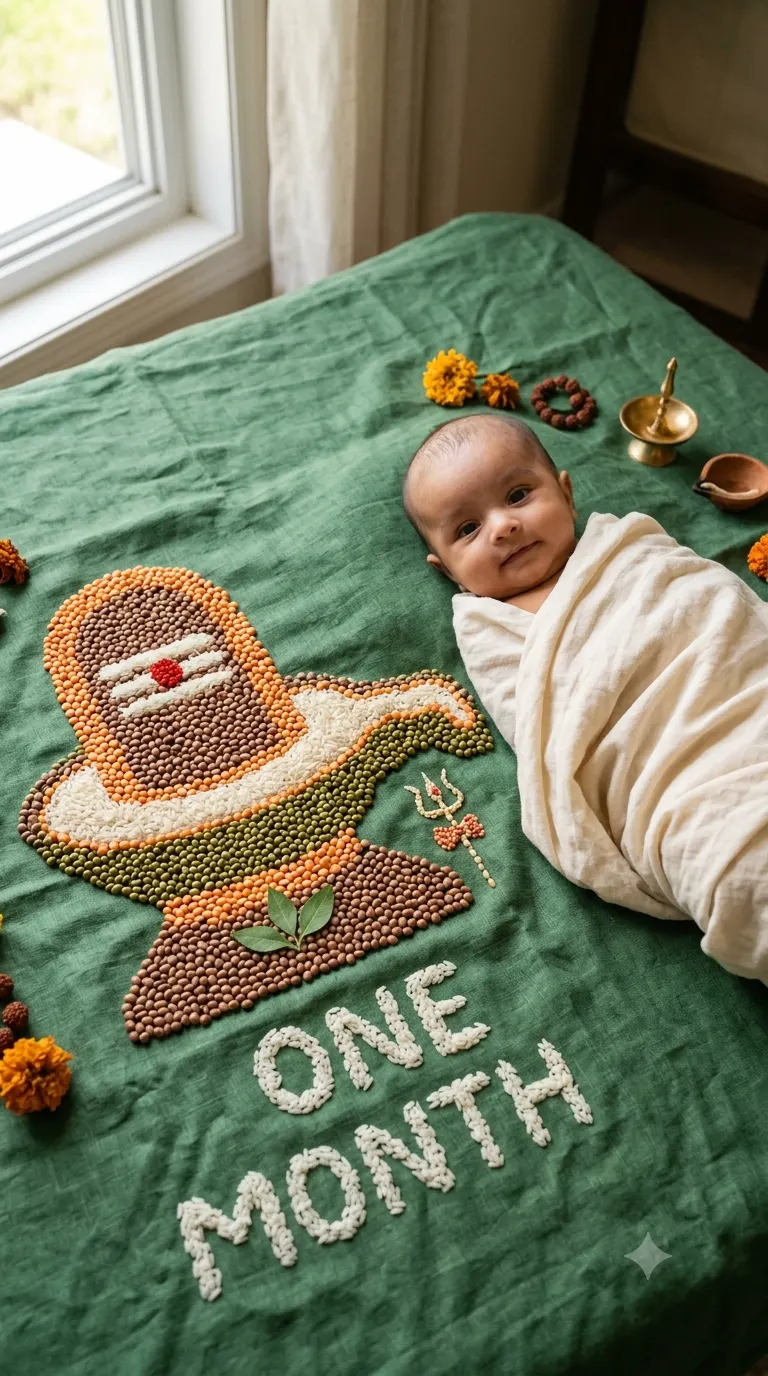
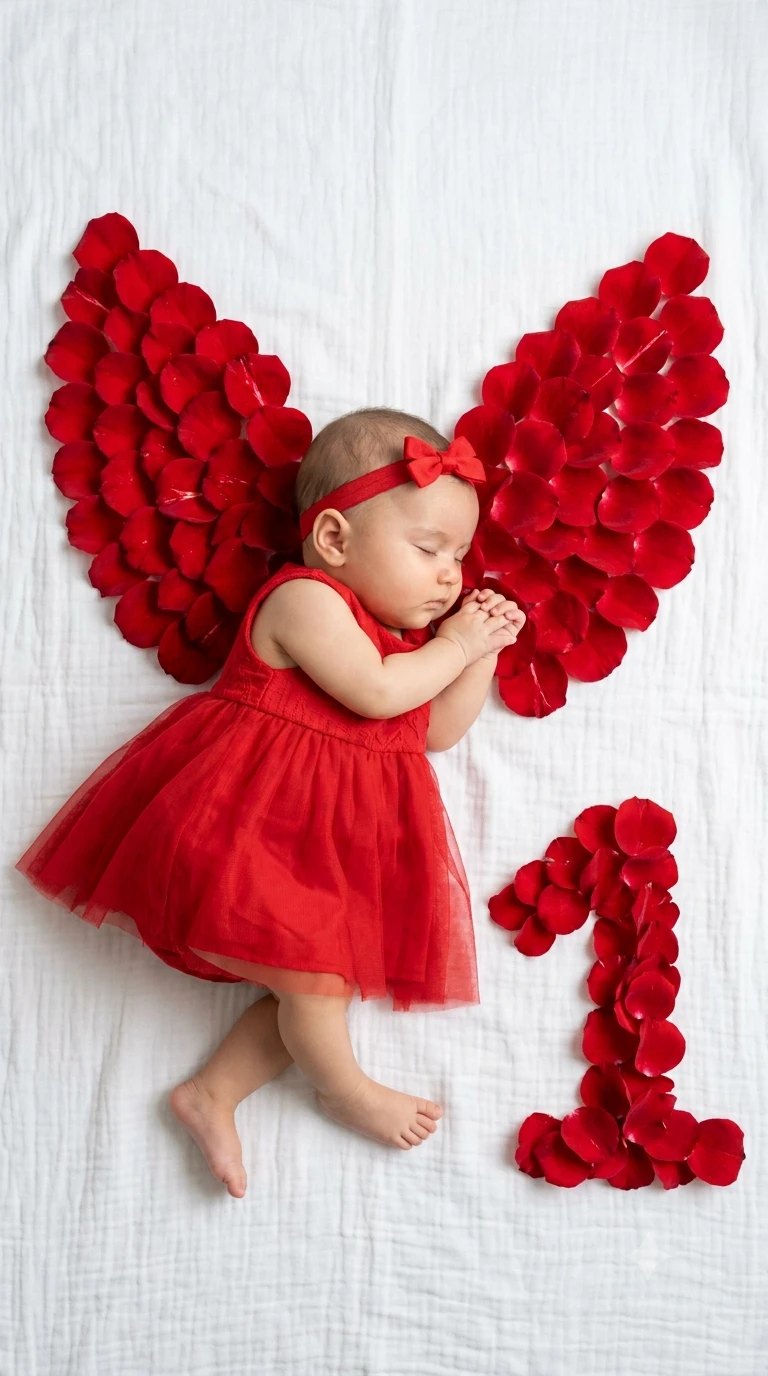
One Month Baby Girl Photoshoot Gemini Prompt
Baby
Create Image Baby Milestone Red Angel Wings With Floral Number 1 1. STRICT FACE IDENTITY COPY DNA Use …
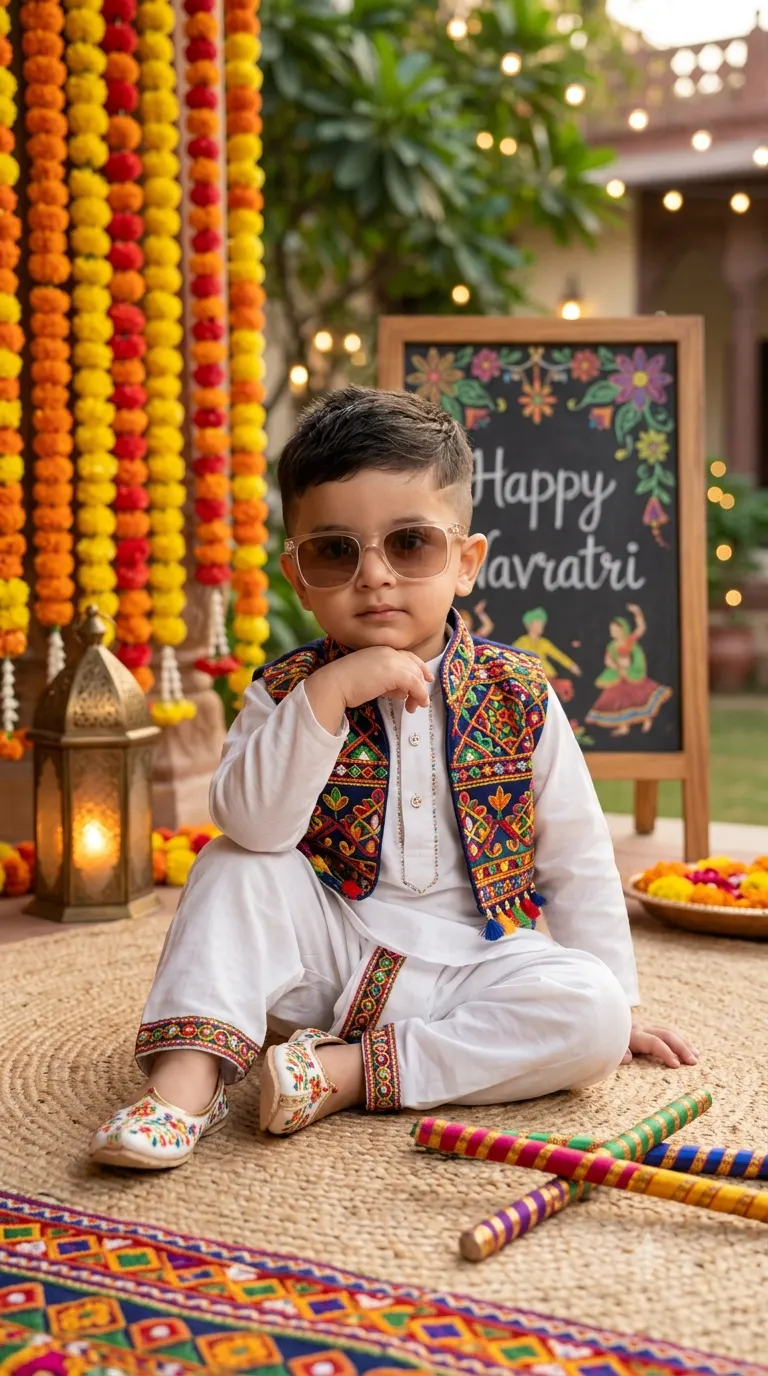
Create Image — Exact Navratri Baby Photoshoot Reconstruction
Use the uploaded reference image exclusively as the facial identity source for the baby boy and directly copy his exact facial identity into the generated image. Copy his exact head shape, forehead, hairline, eyebrows, eyelids, eye shape and spacing, iris appearance, nose, lips, cheeks, jawline, chin, ears, natural skin tone, skin texture, facial proportions, apparent age, and recognizable facial characteristics. Do not create a similar face, face inspired by the reference, or generic baby face. Do not beautify, reshape, enlarge the eyes, modify the nose, change his age, or stylize his facial features. The uploaded image is only the source for exact face identity; every other visual element must be reconstructed from the reference itself.
Reconstruct the reference as a festive Navratri baby boy photoshoot set in a warm traditional Indian festive environment. The baby is seated confidently on a textured floor covering, wearing a white traditional kurta-pajama with an elaborate multicolored embroidered sleeveless Nehru-style jacket and matching traditional embroidered footwear. He wears large transparent-framed sunglasses and has a stylish short haircut. The surrounding environment contains vertical marigold flower garlands, warm decorative lights, a traditional lantern, colorful floor decorations, a chalkboard-style Navratri sign, and festive textiles. The overall visual should feel like an authentic Indian Navratri celebration photographed outdoors or in a decorated courtyard rather than a studio portrait.
Place the baby prominently in the central foreground, seated slightly toward the center-left of the frame. He occupies most of the middle portion while leaving enough background visible to establish the Navratri setting. His body is turned slightly toward the camera, with one knee raised prominently toward the viewer and the other leg folded underneath. Preserve the strong diagonal created by the raised leg and the relaxed seated silhouette. Keep the chalkboard sign visible behind him toward the upper-right, the marigold garlands toward the left background, and the decorative lantern toward the left side. Do not center the baby in a symmetrical studio composition.
Reproduce the exact confident seated pose. The baby sits on the floor with one leg folded underneath his body and the opposite knee raised prominently toward the camera. One arm rests naturally across the raised knee, with the hand positioned near the chin in a relaxed, stylish pose. The opposite arm rests naturally beside the body. Keep the shoulders relaxed and the head slightly angled toward the camera. His expression is calm and confident behind the sunglasses. Preserve the natural proportions of the baby’s limbs and the exact relaxed body geometry visible in the reference.
Dress the baby in a crisp white traditional Indian kurta with a simple collarless neckline and subtle small front embroidery or buttons. Pair it with loose white pajama-style trousers featuring decorative multicolored embroidered borders around the ankle openings. Over the kurta, reproduce the elaborate sleeveless traditional jacket with a deep navy-blue base covered in vibrant multicolored Indian embroidery, including red, yellow, green, orange, blue, and white geometric and floral motifs. The jacket has decorative embroidered edging and small colorful tassel details along its lower edge. Recreate the matching traditional white footwear with colorful embroidered patterns and decorated uppers. Preserve the exact combination of white clothing and highly colorful embroidered vest.
Reconstruct the baby’s short, neatly styled dark hair with a slightly textured top and shorter sides. Add the large transparent or lightly tinted rectangular sunglasses with thick pale frames exactly as visible in the reference. Do not replace them with round sunglasses or another eyewear style. Preserve the traditional embroidered shoes. In the foreground, include several colorful decorated wooden or fabric festive sticks lying diagonally on the floor, with red, yellow, green, blue, and white patterned sections. These props should remain secondary to the baby and naturally integrated into the scene.
Reconstruct a richly decorated Indian Navratri festive setting. On the left background, create vertical strings of densely arranged marigold and colorful flowers hanging from above, with prominent orange, yellow, and red tones. Include a traditional decorative metal lantern on the left side, standing on the floor and glowing warmly from within. Behind the baby, preserve a softly blurred outdoor courtyard or festive venue with greenery, architectural elements, and warm string lights. On the right background, place a freestanding dark chalkboard sign with a wooden frame. The board visibly contains the handwritten English greeting “Happy Navratri”, surrounded by colorful hand-drawn festive floral decorations and small traditional dancing figures. Keep the sign slightly out of focus but sufficiently readable.
Place the baby on a natural beige or tan textured floor covering resembling a woven festive rug or carpet. Preserve the colorful patterned textile visible along the lower foreground, featuring traditional Indian geometric and ornamental designs. Add scattered Navratri decorative elements and colorful rangoli-like patterns around the scene without overwhelming the main subject. The materials must look physically present—real woven fabric, real flowers, real wood, real metal, and real decorative textiles—not digitally pasted graphics.
The background chalkboard contains the clearly visible English text “Happy Navratri” arranged over multiple lines in a handwritten chalk style. Reproduce the exact wording, spelling, capitalization, and line arrangement visible in the reference. The lettering should appear physically hand-written with white or pale chalk on a dark charcoal-black board. Surround the writing with the small colorful decorative floral and festive illustrations visible around it. Do not replace the wording with “Shubh Navratri,” Hindi text, “Happy Dussehra,” or any other greeting. Do not invent additional large text.
Use a low-to-medium camera height positioned approximately at the baby’s seated upper-body level, creating an intimate child-height perspective. Use a slightly frontal three-quarter camera orientation matching the reference. Frame the image vertically so the baby’s full seated body, raised knee, embroidered shoes, foreground textiles, lantern, floral garlands, and background chalkboard remain visible. Keep the baby as the dominant sharp subject while allowing the background to establish the festive environment.
Simulate a professional full-frame camera using approximately a 50mm prime lens from roughly 2–3 metres away. Maintain natural infant body proportions while avoiding wide-angle distortion. Use approximately f/2.8–f/4 to keep the baby, sunglasses, embroidery, and clothing details sharply focused while producing a moderate background blur. The chalkboard and garlands should remain recognizable rather than completely disappearing into blur.
Use warm natural late-afternoon or early-evening light combined with practical warm decorative lights. Illuminate the baby primarily with soft natural light from the front-left, creating gentle highlights on his face, white clothing, embroidered jacket, and sunglasses. Allow the lantern and background string lights to produce subtle warm glowing points. Preserve soft shadows and realistic skin texture. Avoid studio-style flat lighting, harsh flash, excessive rim lighting, or artificial colored illumination.
Preserve the warm festive palette of white clothing, deep navy embroidery, vivid red, yellow, orange, green, and blue decorative details, warm golden lights, beige flooring, and natural greenery. The overall mood should feel joyful, stylish, traditional, festive, and authentic to an Indian Navratri celebration. Maintain natural skin tones and realistic fabric colors. Use gentle warm cinematic grading without turning the scene excessively orange or oversaturated.
Create an ultra-realistic 4K Ultra HD professional lifestyle photograph with authentic baby skin texture, realistic hair strands, natural fabric folds, highly detailed embroidery, individual flower petals, realistic metal lantern reflections, textured woven rugs, chalkboard texture, and physically believable sunglasses. Preserve fine embroidery details in the multicolored jacket and footwear. The photograph should look naturally captured with a professional camera rather than AI-generated, illustrated, or digitally composited.
Do not change the copied facial identity. Do not replace the baby with an older child or generic model. Do not redesign the embroidered jacket, white traditional outfit, sunglasses, seated pose, raised knee, footwear, floral garlands, lantern, chalkboard, or festive environment. Do not remove the visible “Happy Navratri” text or replace it with different wording. Do not add a goddess statue, dandiya performers, temple interior, excessive decorations, extra people, balloons, modern furniture, or unrelated props. Avoid incorrect hands, extra fingers, distorted legs, malformed shoes, duplicated flowers, unreadable chalkboard lettering, plastic skin, excessive background blur, wide-angle distortion, and artificial-looking embroidery.
Generate one ultra-realistic 4K Ultra HD image in a strict vertical 9:16 aspect ratio, faithfully reconstructing the supplied reference. The final image must reproduce the directly copied baby facial identity, short styled hair, transparent sunglasses, confident seated pose with one raised knee, white traditional kurta-pajama, colorful embroidered sleeveless jacket, embroidered traditional footwear, colorful foreground sticks, marigold garlands, glowing traditional lantern, festive courtyard background, patterned floor textiles, and the chalkboard displaying the exact readable “Happy Navratri” greeting. Preserve the original visual hierarchy, camera perspective, subject placement, physical materials, lighting, colors, background relationships, and festive atmosphere without creative redesign.
Explore more prompts related to this one.