One Month Baby Girl Photoshoot Gemini Prompt
Baby
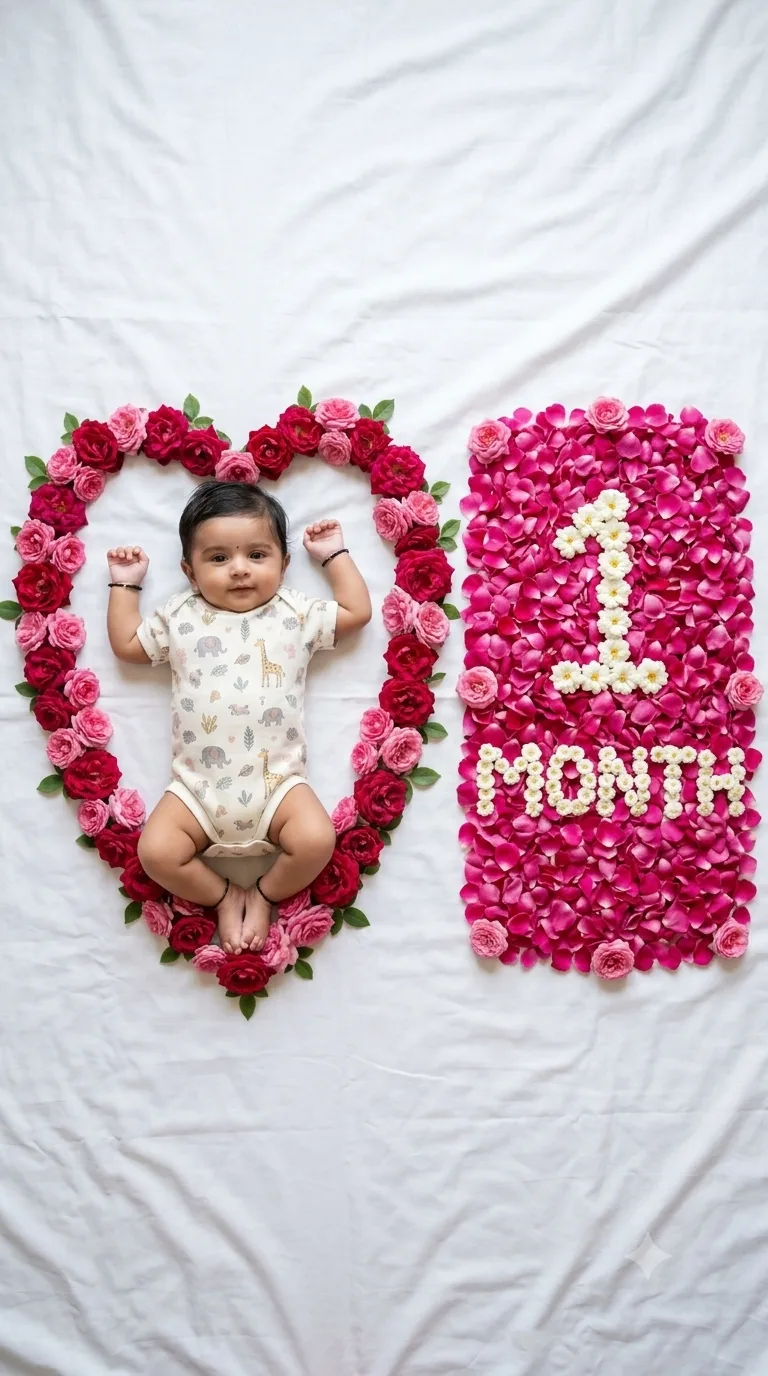
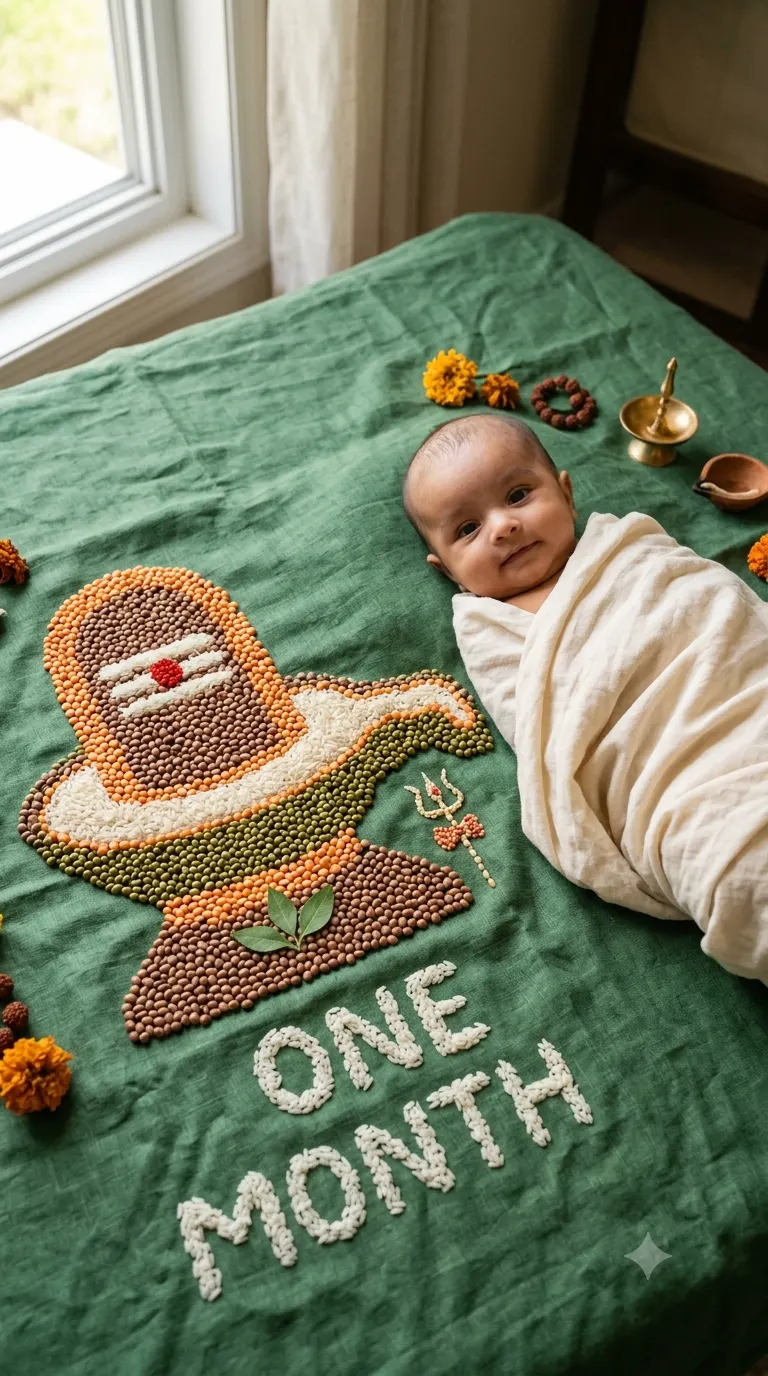
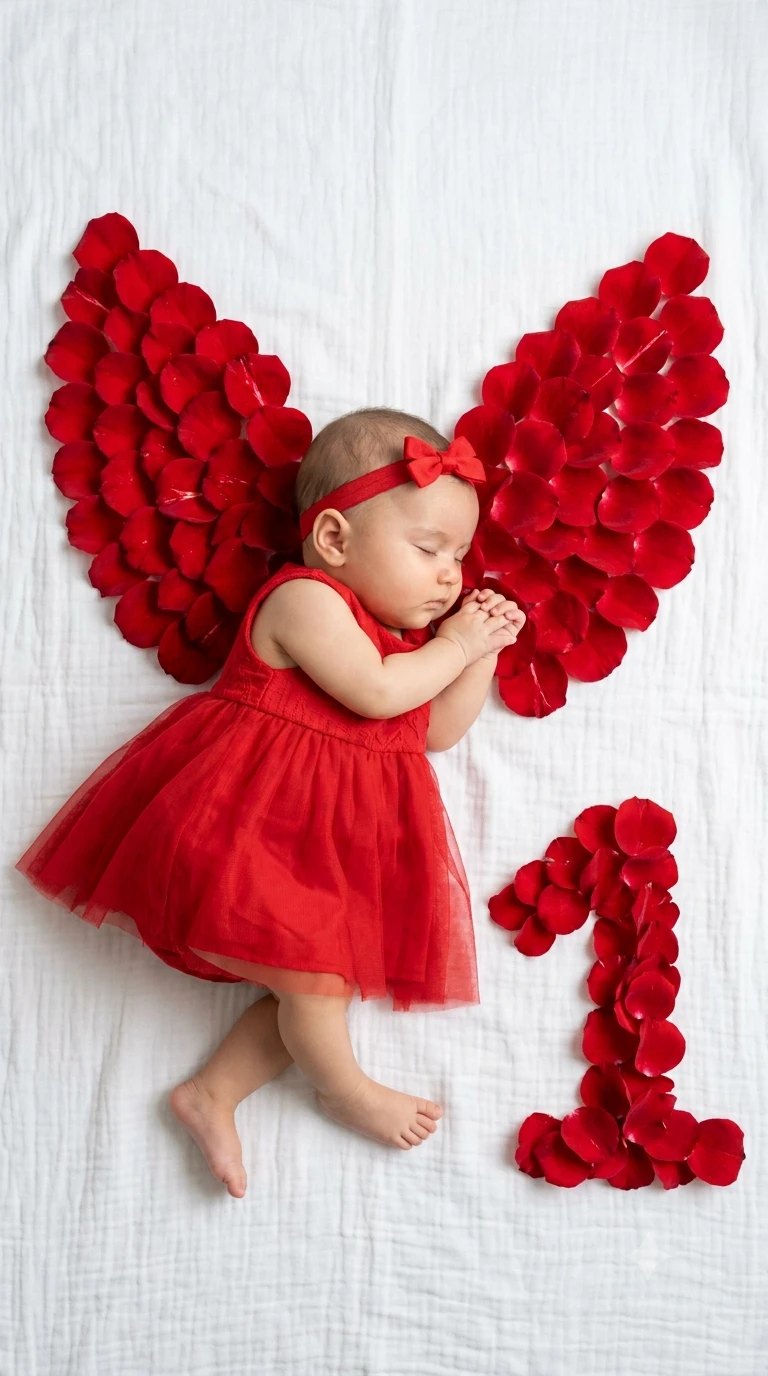
Create Image Baby Milestone Red Angel Wings With Floral Number 1 1. STRICT FACE IDENTITY COPY DNA Use …
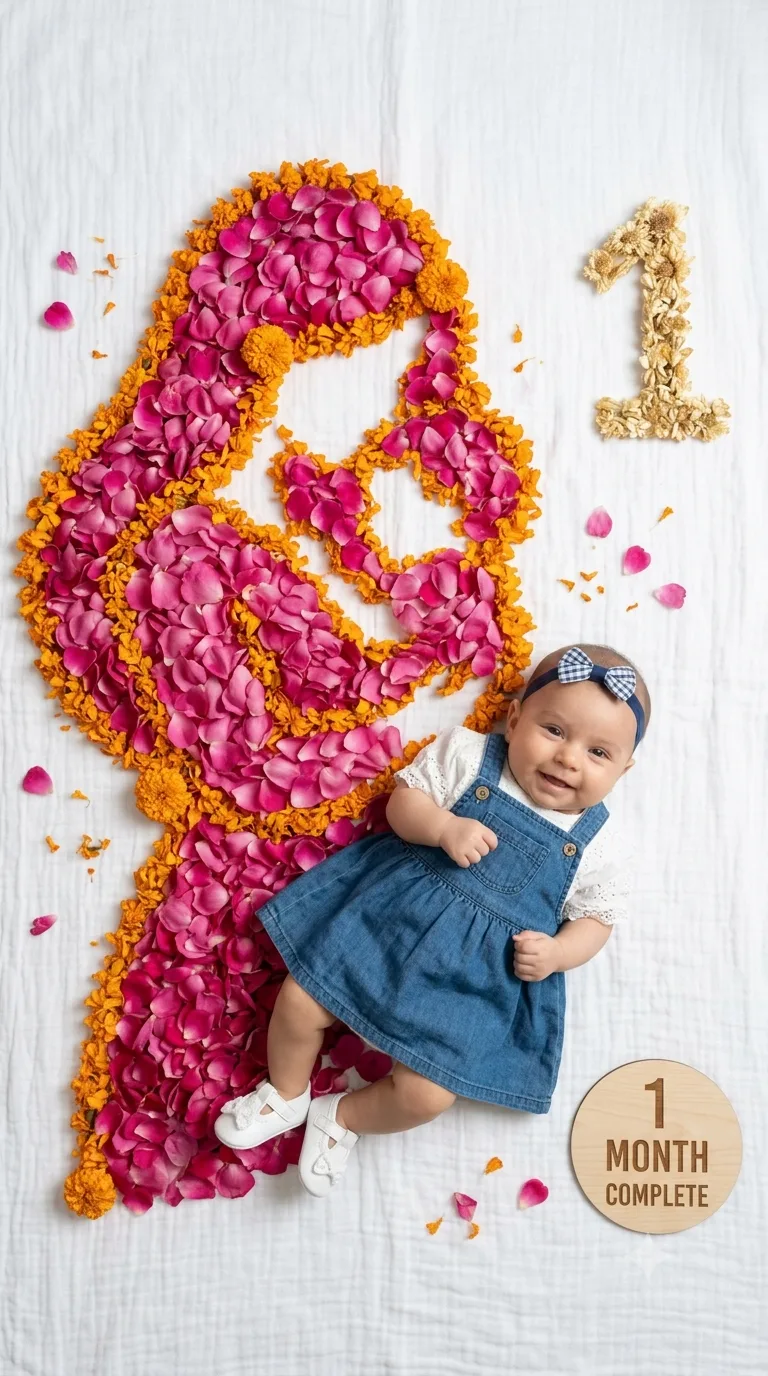
Create Image One Month Baby Milestone With Mother-and-Child Floral Artwork
Use the uploaded reference image exclusively as the facial identity source for the baby. Directly copy the exact facial identity of the baby from the uploaded image into the generated image, including the exact head shape, forehead, hairline, eyebrows, eyelids, eye shape and spacing, iris appearance, nose, lips, cheeks, chin, ears, natural skin tone, skin texture, facial proportions, apparent age, and every recognizable facial characteristic. Do not create a similar face, a face inspired by the reference, or a generic baby face. Do not beautify, reshape, enlarge the eyes, modify the nose, change the age, or stylize the facial features. The uploaded image is used only for exact facial identity copying; everything else must be reconstructed from the reference image.
Reconstruct the reference as a one-month baby milestone flat-lay photoshoot, but correctly understand the large floral artwork as a stylized mother-and-child composition rather than a simple numeral. The main floral arrangement represents a mother figure with a large flowing upper body/head area and a lower body/arms forming a protective shape, while a small child/baby figure is represented within the mother's arms. The baby being photographed is positioned over the lower portion of this mother-and-child floral artwork. The artwork is constructed entirely from dense pink flower petals surrounded by an orange marigold-petal outline. A separate small floral “1” appears toward the upper-right, while the wooden milestone plaque remains at the lower-right.
The most important visual concept is the mother holding her child in her arms. Reconstruct the large floral shape as an abstract but clearly recognizable overhead representation of a mother seated or kneeling while gently holding a small child/baby close to her upper body. The mother's large pink floral form occupies the upper-left and central background, with her body curving downward into a broad lower section. Her arms should visibly curve inward toward the small child figure, creating the visual impression of a mother embracing or holding her baby. The child figure should be smaller and positioned within the mother's arms. Do not interpret this shape as a random abstract pattern, a question mark, a heart, or a simple numeral.
Construct the mother-and-child artwork from thousands of individual pink and magenta flower petals, densely arranged to create recognizable human silhouettes. Surround the figures with a thick irregular border made from orange marigold petals and small orange marigold flowers. Preserve the natural flower arrangement rather than creating smooth digital silhouettes. Individual petals must remain visible, with natural overlaps, folds, orientations, gaps, and subtle shadows.
Place the real photographed baby diagonally across the lower-right portion of the mother-and-child floral artwork, just as in the reference. The baby's head should be toward the upper-right and feet toward the lower-left. The floral mother figure should occupy most of the left and upper-middle background, while the baby visually interacts with the lower part of the floral composition. Preserve the small floral “1” in the upper-right area and the wooden milestone plaque in the lower-right corner.
Reproduce the photographed baby's relaxed flat-lay pose from the reference: lying naturally on their back with the head slightly tilted toward the camera, arms bent beside the body, hands relaxed, legs naturally bent, and feet extending toward the lower-left. Preserve the cheerful facial expression and natural infant body proportions. The baby should appear physically placed on top of the floral artwork.
Reconstruct the exact visible outfit: a white short-sleeved blouse with delicate lace-trimmed sleeves and collar underneath a blue denim pinafore dress with shoulder straps, bib, buttons, seams, and pockets. Reproduce the blue-and-white bow headband and white baby shoes. Preserve the denim texture, white lace details, proportions, and colors. Do not introduce additional clothing or accessories.
The upper-left floral mass represents the mother's head and upper body. Shape the pink petals into a large rounded head/upper-body silhouette, bordered with orange marigolds. The mother's form should flow naturally downward toward the central area, with the orange floral outline defining the outer contour. Preserve the reference's large scale and organic hand-arranged appearance.
Clearly form the mother's arms from the orange-bordered pink floral arrangement so they curve inward and create an embracing shape around a small floral child figure. The child should appear nestled within or held by the mother's arms. The relationship between the two floral figures must communicate mother holding her baby, while remaining an artistic flat-lay floral arrangement. Do not make the mother figure look like wings, a butterfly, a heart, or an abstract loop.
Preserve the separate small number “1” near the upper-right portion of the composition. Recreate it from tiny pale cream/golden floral material, maintaining its approximate size, shape, placement, and handcrafted appearance. It must remain separate from the mother-and-child artwork.
Preserve the small pale wooden plaque at the lower-right. Reproduce the exact visible wording:
“1 MONTH”
“COMPLETE”
Keep the text on two lines, with dark lettering on the natural wood surface. Preserve the plaque's slight diagonal orientation, rectangular shape, natural wood grain, and physical placement on the fabric.
Use the same soft white/light-gray cotton fabric covering the entire background. Preserve the visible wrinkles, folds, and subtle textile texture. The floral artwork, baby, scattered petals, and plaque must appear physically placed on this fabric. Do not introduce furniture, walls, baskets, toys, or additional props.
Preserve the scattered pink petals and small orange floral fragments around the mother-and-child artwork, particularly on the right side. Keep them sparse and naturally irregular. They should complement the main artwork without obscuring the baby, floral figures, number, or plaque.
Use a perfectly 90-degree overhead flat-lay camera angle. The entire mother-and-child floral artwork, photographed baby, small floral number, plaque, scattered petals, and surrounding fabric must be visible from directly above. Preserve the reference's composition and geometry without perspective distortion.
Simulate a professional full-frame camera with approximately a 50mm lens, positioned directly overhead at sufficient distance to capture the complete composition. Use approximately f/5.6–f/8 for detailed focus across the baby, floral artwork, plaque, petals, and fabric. Avoid wide-angle distortion.
Use soft, evenly diffused overhead lighting. Preserve subtle shadows beneath individual flower petals, the baby's body, clothing, shoes, and wooden plaque so every element appears physically present. Keep the white fabric bright but textured and avoid harsh shadows or artificial glow.
Preserve the reference palette of white fabric, vivid pink and magenta petals, warm orange marigolds, blue denim, white clothing, pale wood, and natural baby skin. Maintain a cheerful, affectionate, delicate, handcrafted milestone-photography mood. Keep the floral colors vibrant but realistic.
Create an ultra-realistic 4K Ultra HD professional baby flat-lay photograph. Show authentic infant skin, fine baby hair, realistic denim and lace textures, individual rose petals, marigold petals, small floral details, natural wood grain, and cotton-fabric wrinkles. The mother-and-child artwork must visibly consist of real flowers arranged by hand rather than smooth CGI shapes.
Do not change the copied facial identity. Do not create a generic baby face. Do not interpret the large floral artwork as a simple number, heart, butterfly, wings, question mark, or abstract decoration. It is specifically a mother holding her child in her arms. Do not remove the small floral child within the mother's arms. Do not replace the floral artwork with digital illustration, fabric, balloons, beads, or painted graphics. Do not alter the plaque wording “1 MONTH COMPLETE.” Do not invent additional text. Avoid extra props, excessive flowers, malformed human shapes, distorted baby anatomy, incorrect hands or feet, artificial-looking petals, perspective distortion, or creative redesign.
Generate one ultra-realistic 4K Ultra HD image in a strict vertical 9:16 aspect ratio, faithfully reconstructing the supplied reference. Preserve the directly copied baby facial identity, exact baby pose and outfit, large mother-holding-child floral artwork made from dense pink petals and orange marigold borders, small floral “1,” scattered petals, white wrinkled fabric background, and wooden “1 MONTH COMPLETE” plaque. The reference image is the primary source of truth, and the floral visual concept must be understood as a mother embracing and holding her child, not merely as an abstract floral shape.
Explore more prompts related to this one.