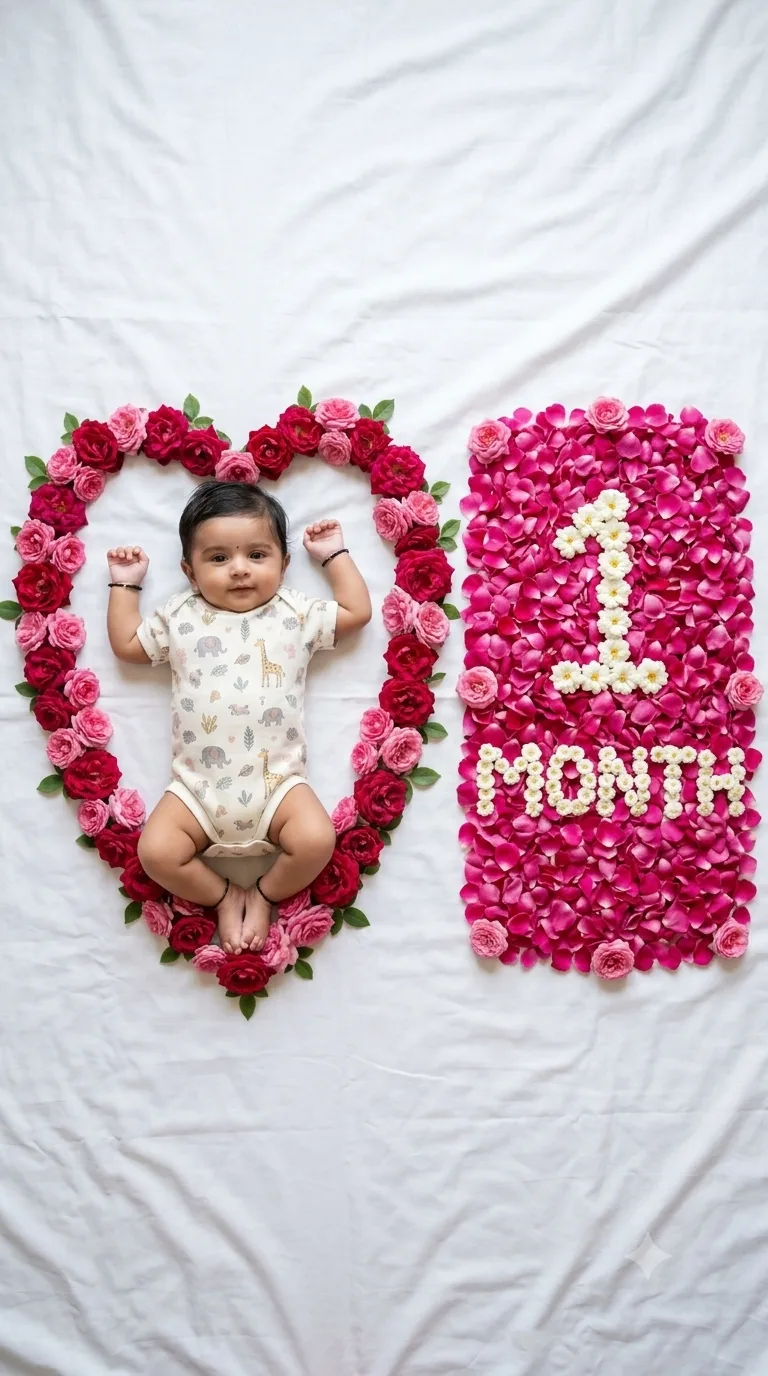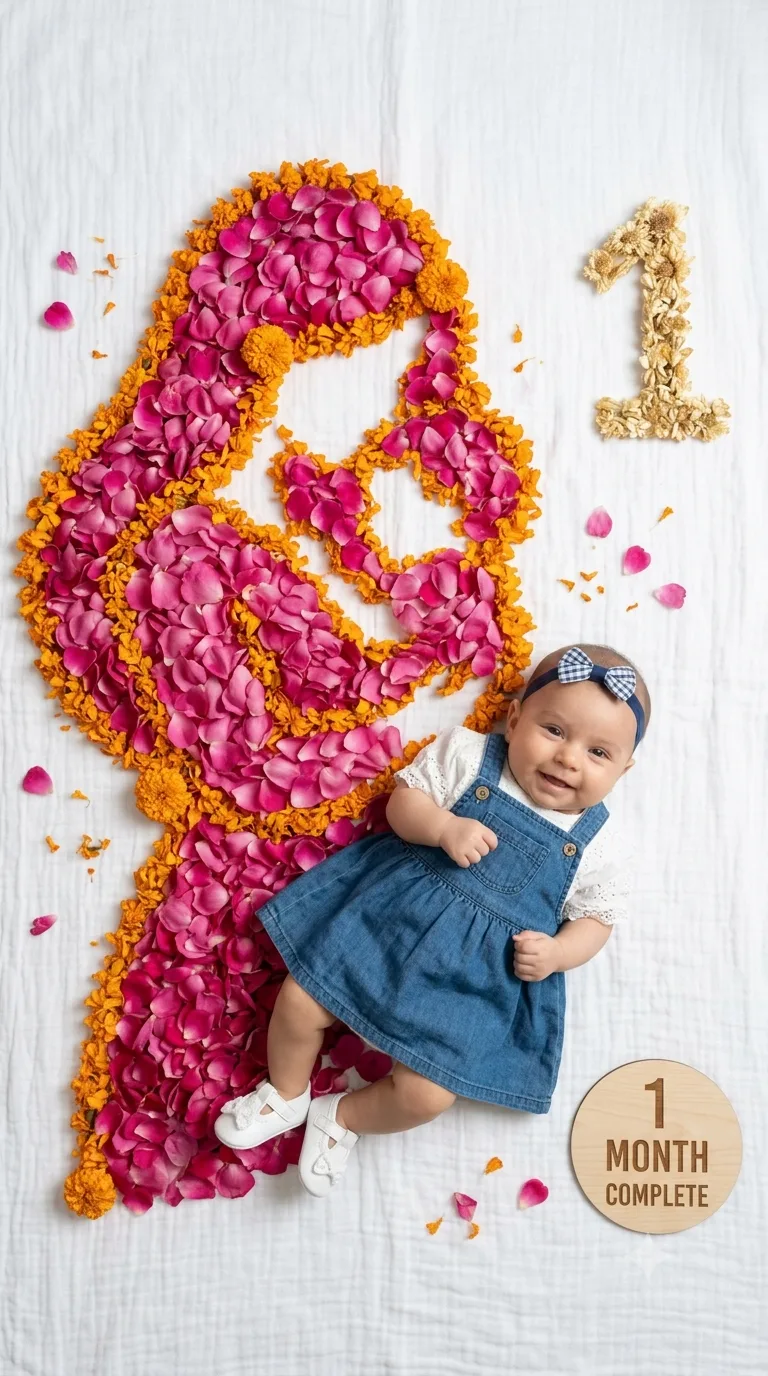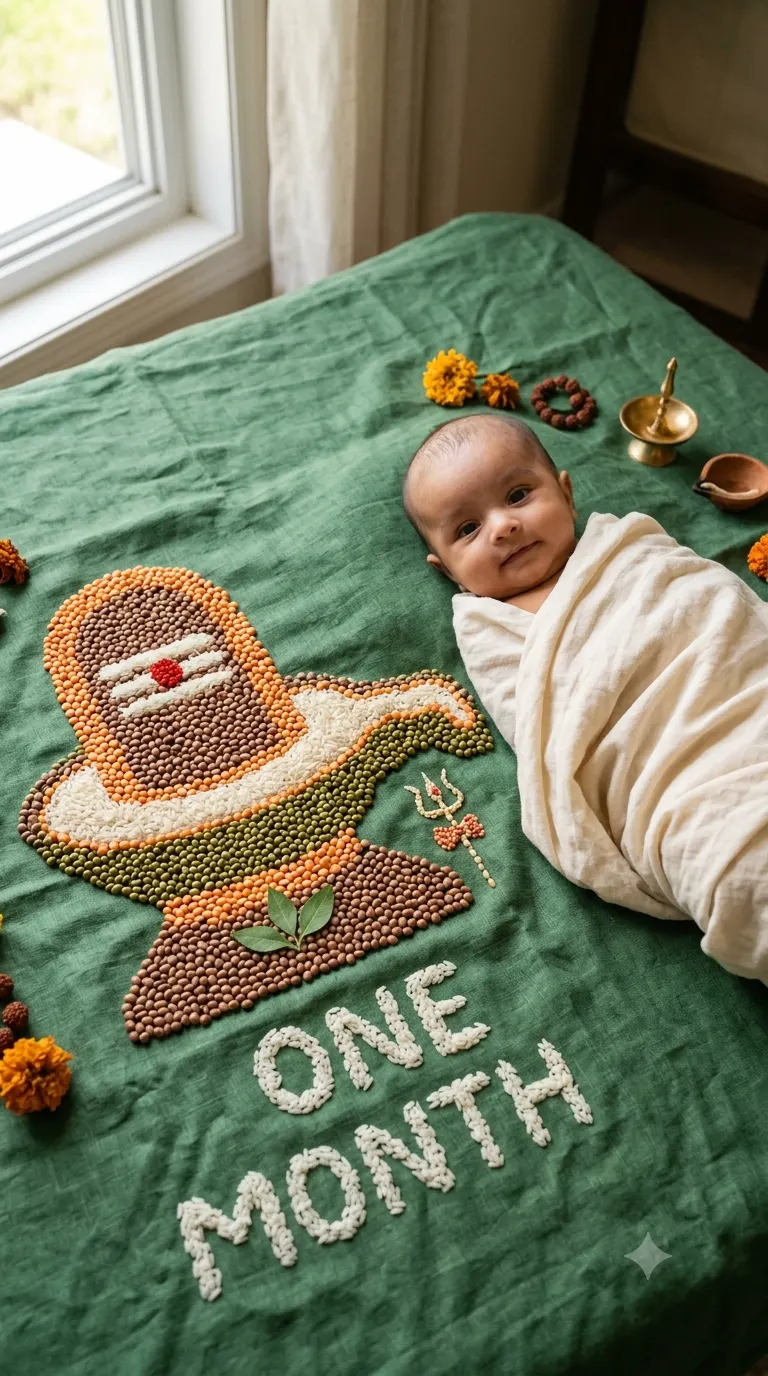
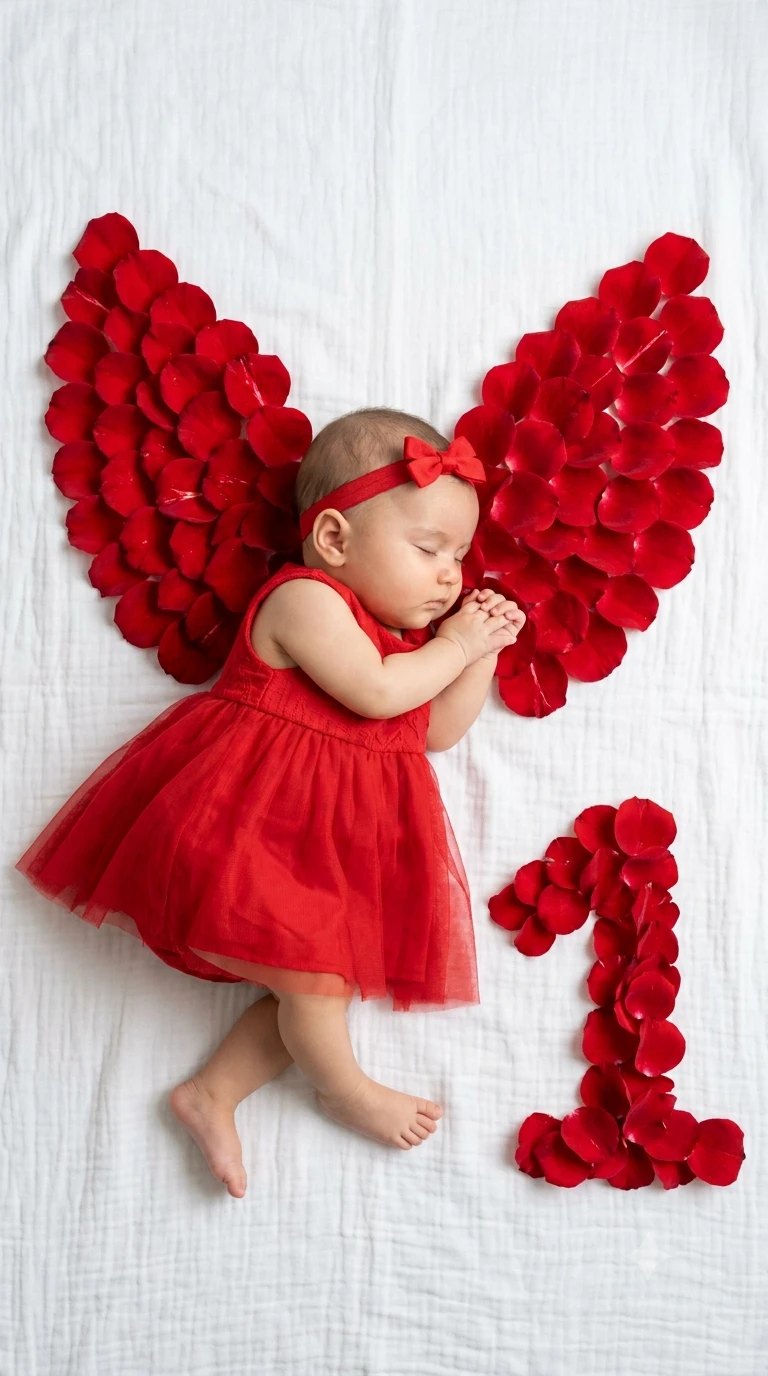
One Month Baby Girl Photoshoot Gemini Prompt
Baby
Create Image Baby Milestone Red Angel Wings With Floral Number 1 1. STRICT FACE IDENTITY COPY DNA Use …
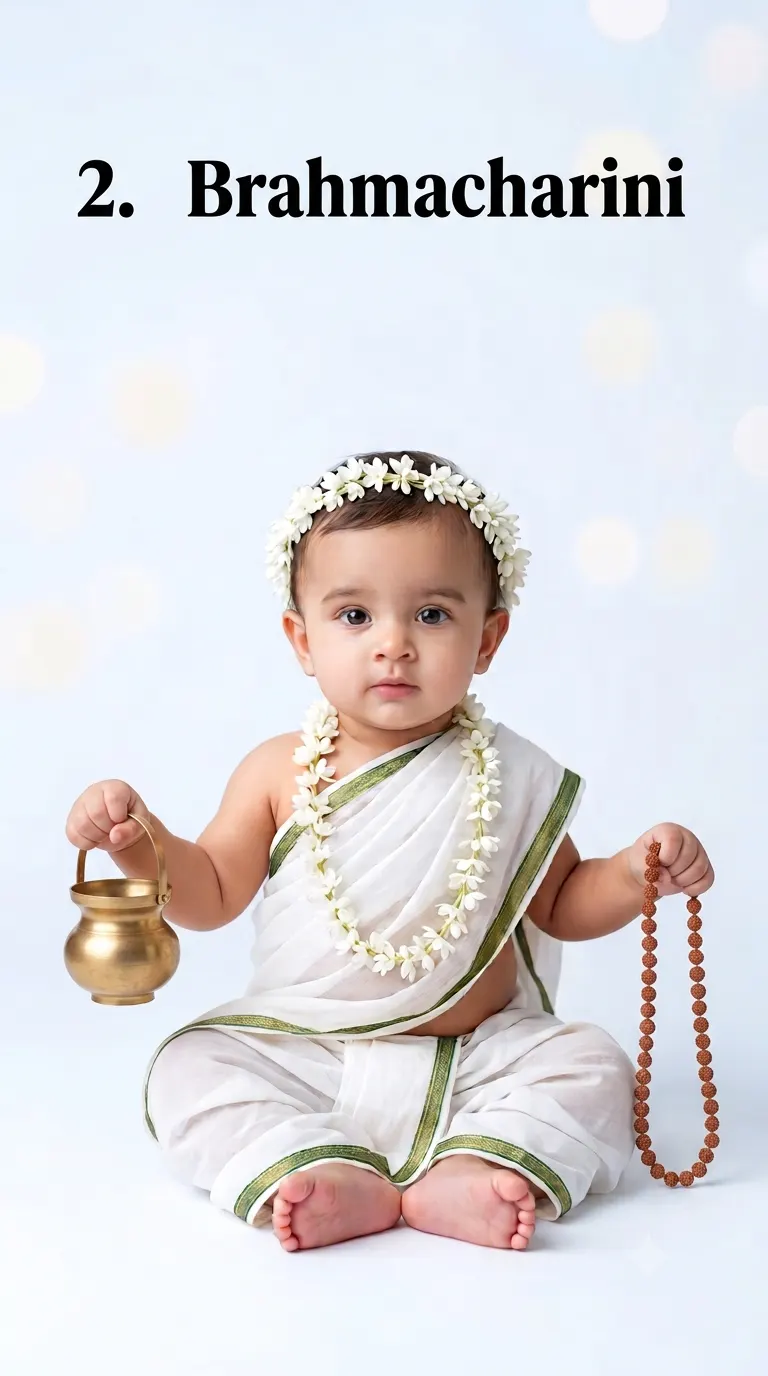
Create Image for Navdurga Second Avatar Brahmacharini Baby Photoshoot
Use the uploaded reference image exclusively as the facial identity source for the baby. Directly copy the baby’s exact facial identity from the uploaded image into the generated image, including the exact head shape, forehead, hairline, eyebrows, eyelids, eye shape and spacing, iris appearance, nose, lips, cheeks, chin, ears, natural skin tone, skin texture, facial proportions, apparent age, and recognizable expression characteristics. Do not create a similar face, a face inspired by the reference, or a generic baby face. Do not beautify, reshape, enlarge the eyes, alter the nose, modify the jaw, change the age, or stylize the facial features. The uploaded image is used only to copy the exact facial identity; all other elements must be reconstructed from the visual reference and the written blueprint.
Reconstruct the reference as a Navdurga baby photoshoot representing the second avatar, Maa Brahmacharini. The reference presents a baby seated centrally against an extremely soft, bright white-to-pale-blue studio environment, dressed entirely in white traditional clothing with delicate gold edging, a white floral head decoration, a white flower garland, a rudraksha prayer mala in one hand, and a small golden kamandalu in the other. The composition is intentionally minimal and serene, with the baby as the central subject and the title “Brahmacharini” positioned prominently above. Reconstruct this exact visual concept rather than redesigning it into a different depiction of Brahmacharini.
Place the baby centrally in the vertical frame, occupying the central middle and lower-middle area. Maintain generous pale negative space above the baby for the title and soft atmospheric background. The baby sits directly facing the camera with the body centered. The rudraksha mala extends downward from the baby’s hand on the viewer’s left, while the small golden kamandalu rests naturally in the opposite hand on the viewer’s right. Preserve the balanced relationship between these two symbolic props and the centered baby. Keep the entire seated baby, feet, clothing, mala, kamandalu, floral headpiece, and title comfortably inside the frame.
Reproduce the baby’s upright seated pose with the torso facing directly toward the camera and the head naturally upright. Keep the baby’s expression calm, innocent, and neutral with a gentle attentive gaze toward the camera. The viewer-left hand holds the long rudraksha prayer beads, allowing the beads to hang naturally downward beside the baby. The viewer-right hand gently holds or rests against the small golden kamandalu positioned beside the torso. Keep both arms naturally bent and relaxed. The baby’s legs remain comfortably folded in a seated infant pose with the small bare feet visible beneath the white clothing. Preserve realistic infant anatomy and natural proportions.
Dress the baby completely in a traditional white Brahmacharini-inspired Indian outfit. Reconstruct the flowing white draped garment covering the torso and legs, with subtle cream or pale-gold edging along the borders. The fabric should be lightweight, soft, layered, and naturally folded around the seated baby. Add the delicate white flower garland around the baby’s neck, with small natural white blossoms distributed along the garland. Recreate the white floral head decoration positioned across the hairline and crown area, made from small natural white flowers arranged into a delicate baby-sized floral band. Keep the styling simple and devotional, without introducing colorful clothing, excessive jewelry, crown-like accessories, or unrelated ornaments.
Reconstruct the long rudraksha prayer mala held in the baby’s viewer-left hand. The beads must appear as individual natural reddish-brown rudraksha beads connected by a thin thread, with realistic bead texture, size variation, and natural hanging weight. Recreate the small golden-brass kamandalu in the opposite hand, with a rounded traditional vessel body, narrow neck, small opening, and warm metallic surface. Keep both props realistically scaled for the baby. The floral elements must look like real physical flowers, not printed graphics or digital decorations. Preserve the actual material qualities of flowers, beads, cloth, and metal.
Recreate the reference’s extremely clean, high-key white studio environment with a subtle cool pale-blue tint toward the upper background. The background should remain almost seamless and uncluttered, creating a soft devotional atmosphere. Include the very subtle out-of-focus pale cream and white circular light forms visible in the reference, scattered sparsely through the upper background. The baby sits on a soft white textured surface with delicate white feather-like or fabric-like details around the lower foreground. Do not add a temple, outdoor scenery, architectural elements, deity statues, colorful decorations, or dramatic background objects.
Reproduce the exact visible text “Brahmacharini”. Preserve the English spelling “Brahmacharini”, capitalization, spacing, and punctuation. Position the text horizontally centered in the upper portion of the image above the baby, matching the reference. Use a large, bold, elegant black serif typeface with strong readable letterforms. Maintain the generous white space around the title and its visual hierarchy. Do not translate the text, change the spelling, replace it with Hindi, add “Navdurga,” add another avatar name, or introduce additional captions. The text must be clean, correctly spelled, and clearly readable.
Use a straight-on front-facing portrait camera with the sensor parallel to the background. Maintain a centered symmetrical perspective with the baby positioned directly along the vertical center axis. The camera should be approximately level with the baby’s upper torso and face rather than looking dramatically downward or upward. Frame the image vertically so the complete title, floral headpiece, entire seated baby, hanging rudraksha mala, golden kamandalu, and visible feet remain inside the composition. Preserve the reference’s calm frontal portrait geometry.
Simulate a professional full-frame portrait camera using approximately a 50mm prime lens from a moderate distance of roughly 2.5–3 metres. Maintain natural infant proportions with no wide-angle distortion. Use approximately f/4–f/5.6, keeping the baby, floral headpiece, clothing, mala, and kamandalu sharply detailed while allowing the distant pale background elements to remain softly defocused. Keep the camera height approximately aligned with the baby’s upper body and maintain a natural perspective.
Use large, soft, diffused high-key studio lighting from the front and slightly above the baby. Illuminate the face evenly with delicate highlights and extremely soft shadows. Maintain natural skin texture despite the bright exposure. Allow subtle highlights to appear on the white flowers, white fabric borders, rudraksha beads, and golden kamandalu. Keep the white background luminous but retain enough tonal separation to distinguish the baby’s white clothing from the background. Avoid harsh shadows, dramatic directional lighting, colored lighting, strong rim lights, or excessive glow.
Maintain the reference’s predominantly white, cream, pale-blue, warm-gold, and natural skin-tone palette. The overall image should feel peaceful, pure, devotional, serene, and elegant. Keep the white clothing bright but textured, the rudraksha beads naturally warm reddish-brown, and the kamandalu subtly golden-brass. Preserve the soft cool-white atmosphere visible in the reference. Avoid saturated colors, cinematic orange-teal grading, heavy contrast, dark shadows, neon effects, or excessive HDR.
Create an ultra-realistic 4K Ultra HD professional baby portrait with authentic infant skin texture, fine natural hair, realistic flower petals, individual rudraksha bead details, physically believable white fabric folds, and realistic brushed golden-brass texture on the kamandalu. Maintain anatomically correct hands, fingers, feet, facial proportions, and infant body geometry. The flowers must look physically present and naturally arranged. The final result should resemble a professionally photographed devotional baby photoshoot rather than an illustration, CGI render, or artificial digital composition.
Do not change the copied facial identity. Do not create a generic baby face or adult-like features. Do not replace Brahmacharini styling with another Navdurga avatar. Do not add a crown, trident, lotus, lion, temple, goddess statue, weapons, colorful clothing, excessive jewelry, additional people, or unrelated religious objects. Do not replace the real floral headpiece or flower garland with artificial graphics. Do not turn the rudraksha mala into generic brown beads or replace the kamandalu with another vessel. Do not alter the exact text “Brahmacharini”, misspell it, translate it, or add additional wording. Avoid malformed hands, extra fingers, distorted feet, plastic skin, cartoon rendering, excessive makeup, harsh lighting, dark backgrounds, wide-angle distortion, and unnecessary creative deviations.
Generate one ultra-realistic 4K Ultra HD image in a strict vertical 9:16 aspect ratio, faithfully reconstructing the supplied reference. The final image must contain the directly copied baby facial identity, centered seated composition, white Brahmacharini-inspired traditional outfit, natural white floral headpiece and garland, rudraksha mala in the viewer-left hand, small golden kamandalu in the viewer-right hand, bright seamless white and pale-blue studio environment, subtle soft background light forms, and the exact readable title “Brahmacharini” above the baby. Preserve the reference’s proportions, visual hierarchy, camera geometry, lighting, materials, negative space, and serene photographic character without creative redesign.
Explore more prompts related to this one.